Archives for category: Technology

I can’t explain it either, but it’s fascinating.

Why is St Patrick’s Day celebrated in such style and with such fervour in so many places around the world? Ireland boasts a diaspora of 70 million people, but that can’t be anywhere near the largest. Only the Chinese New Year comes close, and we’re talking about a national powerhouse of 1.4bn souls, fully 350 times Ireland’s population.

Paddy’s Day – and that’s not a pejorative term by the way, not is it ever St Patty’s Day, my American friends – doesn’t even occur on the weekend most of the time, yet still hundreds of thousands of Americans take a holiday to celebrate it and their Irish ancestry.

Ireland – and I’m talking about the Republic here; I’m mildly embarrassed to admit I don’t know much about Northern Ireland, except that it has great tourism advertising – seems to have cultivated the art of charming the pants off you while taking ever so small liberties. For example:

– a corporate tax rate that is the envy of most countries except the ‘offshore’ ones and the bane of the EU’s life

– peaceful nation status with a peace-keeping force, for the best of both worlds

– a genuinely warm welcome unless you’re English (an 800-year reversal of fortunes, let’s not go there) and then if you are it’s a genuinely warm welcome until they know you better

– the high wire act of leveraging a world renowned stout without getting bogged down by unhelpful links to alcohol and its abuse

– genuinely friendly and talkative while also using swear words like definite articles

– cutting edge in areas of business like IT, and antediluvian in its tolerance and memory of shady business and political practices

– great on innovation and entrepreneurship, less so on infrastructure and healthcare

– lovely scenery, without ever being out-of-this-world lovely as boasted by other countries 

For all these reasons Ireland is the most transportable of brands and punches way above its weight in cultural and touristic terms. How this translates into the global transplanting of Paddy’s Day once a year – beats me. I do love living here though…
I was doing some work outdoors the other day, an activity for me about as common as seeing an eskimo in the Democratic Republic of the Congo. A spot of waste recycling and composting was my choice of chore.

Reduce, reuse, recycle is the adage they use to remind us of our environmental obligations. For me the rank order should be to reuse if you can, otherwise recycle, and if you can’t recycle, and it’s landfill city, then reduce as much as possible. Recycling is great, but there’s a fair amount of energy involved in washing or reconstituting the plastics, cardboard and paper.

Composting is a different story. It’s nothing short of amazing. I’d forgotten how amazing. Take your used tea bags, egg shells and uncooked food, stick them in a bin, and the passage of time plus some friendly worms transform it into nitrogen-rich compost to spread on your vegetable patches so you can reiterate the circle of life. Total out-of-pocket expenses on this process – excluding the sunk cost of your bin and any worms you add to the mix – zero. Beautiful, perfect even.

Marketing via the leveraging mechanism of the Internet is a bit like this. In the connected economy the cost of reproducing something that’s already been created tends towards zero. Once you have your compelling content, it’s relatively easy to recycle it automatically through your other social media channels, rework it, reuse it and keep benefitting from it. It’s the gift that keeps on giving.

You don’t have to wait for time to transform it into something else but do you need to allow time for your social media efforts to pay you back. But that bit you knew already.

The size of a company seems to be inversely proportional to the quality of service it provides. As markets mature you get consolidation, resulting – in the opinion of this writer – in less choice for the customer and more chance of being lost in the system.

As a case in point I offer you my recent experiences trying to set up online banking for an account I’ve not used in a while. I’ll spare you the details and give you the shorthand. First I had to wait two weeks while they changed one letter – a typo – in the address details they had on file, which of course required a written letter. That done, the website didn’t recognise my bank details so I couldn’t apply online.

So I applied using good old fashioned snail mail, filling in an application form and posting it. A week later, a letter arrived which I expected to be my activation letter. No, it was a letter saying my paper application had been rejected because the address I supplied didn’t match the one on file. Two calls to the bank revealed that – no – the addresses did match, and they would look into it and call me back. The back and forth so far has been between at least 5 different divisions of the bank.

I should mention that this an account I have had for over a decade and which I originally set up over the phone.

Passing my local branch the other day, I decided to pop in and see if they could help. Lo and behold, the system they accessed showed an address that I haven’t lived at for six years, even though I’ve been getting statements to my current address for the entire subsequent period. While the bank hasn’t yet sorted out my online access, my view is that the problem lies with a defunct account I might have had that was with a previously independent bank that the behemoth bank has acquired.

Can you imagine what the back end systems and customer information are like after a generation of M & A activity? It’s hard to imagine how many gremlins are lurking among the mainframes. In this era of multi-channel dealing, where we may choose to interact with suppliers through a variety of media and devices – witness my current issue which I have tried to address by paper, face-to-face, phone, web and chat – they don’t have a cat in hell’s chance of catching up and competing.

When I sit on a London-bound train and don’t want to shut the world away and write, like I’m doing right now, I like to soak up the ambience of my train carriage and home in on some of the mobile conversations that the less discrete business people tend to have after their meetings in the UK’s capital.

As well as the standard business shorthand phrases like ‘food for thought’, ‘keep moving forward’, ‘in this together’ etc. I usually have this unexplainable – as opposed to inexplicable – feeling of sadness wash over me. Not because I want to work where they work, but because of the inherent unproductiveness of big society where a mass of people mills around like atoms in a pan of boiling water.

All these people travel together with strangers into the big city, head to their specific meeting with their customer, partner or supplier, conduct their business, scurry back to their travel hub and head back home. They use the journey back for follow-up calls, post mortems, problems, solutions and actions, all within earshot and sight of another band of strangers.

And that, for me, is the modern big city: a vast collection of people on the move, in between things, trying desperately to minimise their A to B time and expenses. Whole industries built around a state of perpetual transience.

The promise of the Internet is that it can bring us together in ways that the phone never could do. Despite the advantages that the face to face element of Skype and video conferencing delivers, nothing has yet replaced the physical meeting as the pinnacle of human interaction and collaboration.

And hence the sadness. We crave interaction from our fellow humans, yet meeting them is all so inefficient. Teleportation would be extremely handy, but in the absence of that, I always wonder if there is a better way to co-ordinate these millions of criss-crossing journeys.

I think when I get back to my home office I’m going to stew on that and not come out until I have fixed it. Or in case someone wants to see me for a meeting

When in our business or working lives are we at our most productive?

Is it in our 20’s when we’re single and can travel the world? Is it in our 30’s when we have the energy and the focus? Is it in our 40’s when we have the experience to work smart? What about in our 50’s when we have the seniority and gravitas?

In most working environments we tend to be – or are at the very east hoping to be – tapering our work commitments and efforts in our 60’s, yet as is well documented, a constantly increasing section of the global population is working for longer. As the population shifts and it becomes increasingly unsustainable for the younger working people to support the funds that the older retired people draw from, so the retirement age increases and the state pension reduces.

For my generation, with the exception of those who have won the lotto, hit the jackpot, or robbed a bank, the equation is obvious. Take slightly older parents of kids who will probably go to college, add a couple doses of pension fund and property value collapses, and you have a retirement age of at least 70. Ouch.

As a man whose father retired at 50, it comes to me as something of a shock, I don’t mind telling you.

What this means is that the bell curve of productivity is going to have to move significantly to the right – where age is on the x axis – in order for the macro sums to add up. In terms of our age, just like in business, this means that our personal Q3 is going to have to be a big one. Even our Q4 too, if we live that long. What we have against us of course is our age and our dwindling physical and mental capacities. Failing this fairly crude maths coming up trumps, something fundamental is going to have to change in society and how we work.

I’m not downbeat though. I think technology will continue to help us save time, save energy, and reduce distances. It will change the game, invent new paradigms, banish the old ways of doing things, and any other cliché you can’t think of.

I don’t know how it will, but it will, it has to. If I did know, I’d be retiring in Q2…

Most of us have been shopping online for 15 years or more. I remember my first ever online purchase. It was on Amazon. I couldn’t believe how easy it was. To this day Amazon remains the benchmark of how to serve customers.

For someone like me, who doesn’t live in the country where he was born and raised, online shopping is a thing of beauty. I can send birthday and Christmas presents to family and friends at good prices, avoiding any postage charges because the gifts are being delivered domestically. For people who are at their busiest at this time of year, it is convenient, quick, secure and good value.  What more can you want?

Ironically, I’ve been doing some work with a provider of an ecommerce platform that allows retailers and merchants to extend their coverage across marketplaces. Not just Amazon and eBay, who consume not far off two-thirds of all global ecommerce, but all their international counterparts, as well as a host of other smaller or more niche marketplaces. Having been a consumer for a decade and a half, it’s been a fascinating few weeks seeing how things work from the other side of the transaction.

There’s one thing I’m sure of. The numbers for online are only going in one direction in the future. Indeed, we’re looking at not much more than the tip of the iceberg of what is possible on the web. And by all accounts, the web itself will be but a mere frippery compared with the ‘Internet of things’.  Change is a constant :-).

A friend of mine suffered a LinkedIn unfriending the other day. He wasn’t sure whether he should be traumatised or relieved.

Getting unfriended or unfollowed in social media is like hearing some direct feedback from someone who doesn’t know you’re within earshot. You don’t get a note saying that someone has unfriended or unfollowed you. Instead, you find out about it indirectly.  In my friend’s case, he started getting daily suggestions to link in with this person. My friend has connected with this person, met him, they attended a social function, and then this person had deemed the relationship not worthy of maintaining and so severed it.

This is a good thing, in my opinion. It’s like getting an early ‘no’ in sales, so you’re not being strung along for weeks and months by someone who can’t or won’t say no. I think it’s good for two reasons:

1) They’re saving you the time of currying their favour. This buys you back time to figure out how to bypass them and their influence.

2) They’re not worthy of connecting with you anyway. Some accurate self-esteem is required to adopt this position!

Do you agree? Like many things, you can argue both ways.

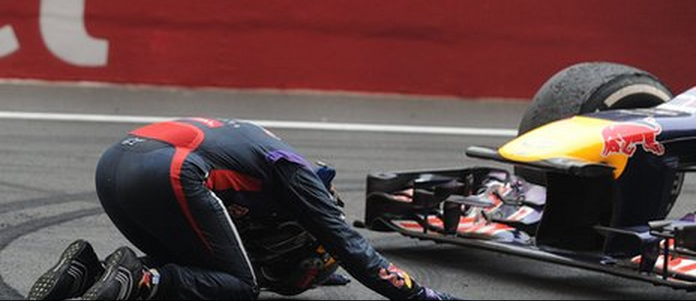
Vettel bows before his championship-winning Red Bull F1 car

Vettel bows before his championship-winning Red Bull F1 car

The role of technology is to make our lives easier.  To help us make better decisions.  To make us look good – and take that in any way you like.

Is it us or the systems? The more modest among us say: ‘Thanks, but we made a great investment in this software, I know how to get the best out of it, and it does all the work for me.” The less modest among us share only the middle clause in the quote.

The truth lies in the middle.  We have selected the right technology because we defined carefully what it needed to do for us. We took the time to learn how to use it properly and fine-tune it for our uses. We tried to be ruthlessly consistent with the inputs so that we could trust the conclusions we were making from the inputs. We tested, reviewed, tweaked and improved as we went. (Wo)man and machine, in perfect harmony.

Establishing exactly where in the middle the truth lies is really difficult.  It’s a constant source of debate in Formula 1 motor racing.

Talk about a deeply philosophical title.  I dread to think how many people will be drawn to the title on Google thinking they’ve stumbled on some astronomical treasure trove.

What I’m referring to here is how much time is wasted interacting with our fellow humans. Calling round to empty homes, voicemails, occupied signs, over-running meetings, traffic delays, busy signals. If only we could align ourselves better for the common good – and not pull rank or status to short cut getting to who we need – then we will all benefit.

Of course, with the human a particularly competitive race this is never going to become a reality, and I have touched on why this is the case in part in a previous post. The best we can do is consider who it is we’re trying to interact with and make it as easy as possible for them to do that with us, and so that they have a net benefit to reward their effort.

One thing is for sure: the connected economy is slowly but surely reducing inefficiencies, rounding off corners, and make our world less imperfect due to its economies of scale, its immediacy, and its convenience. And that can only be good.

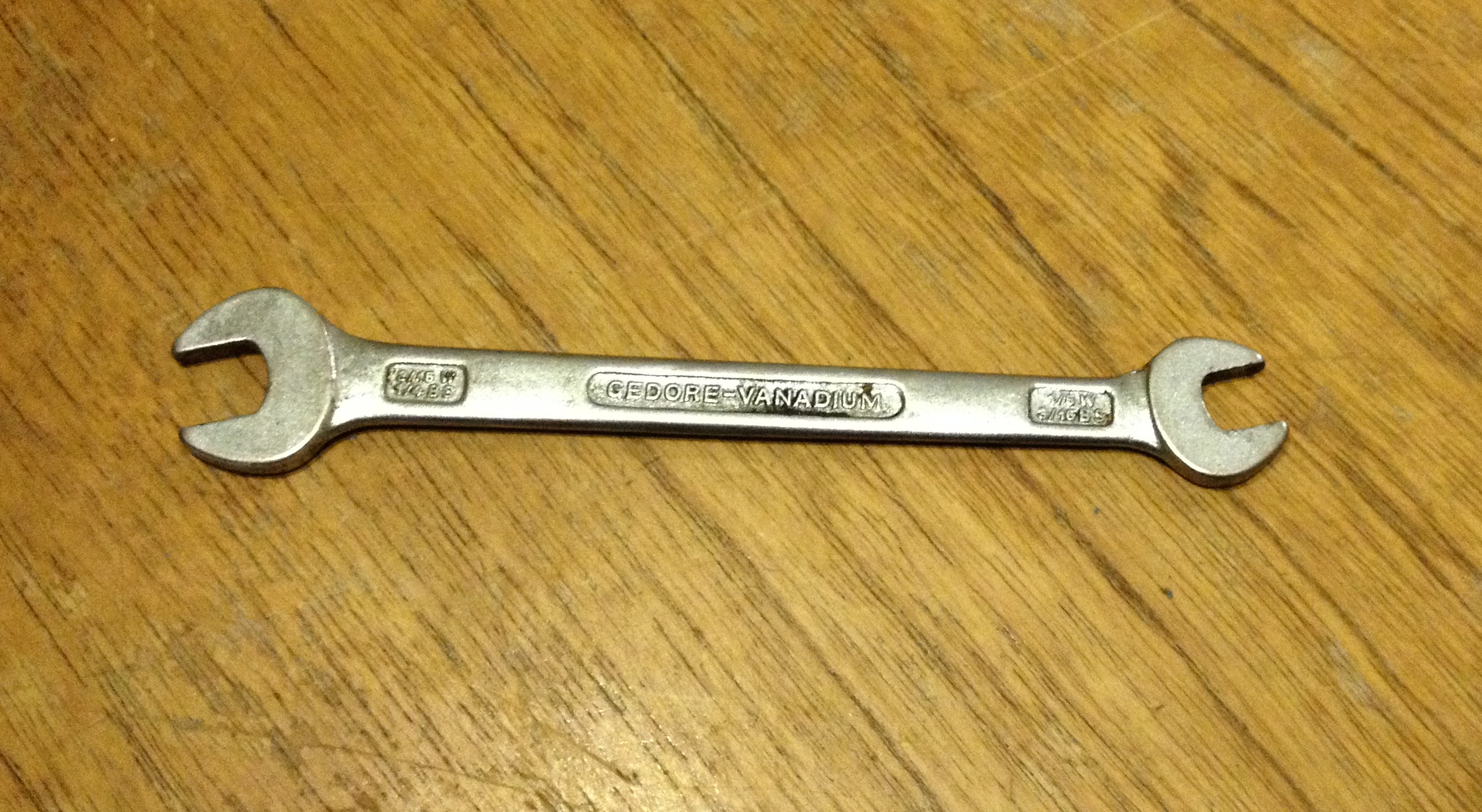
IMG_1509

This is a tool…

A spanner is the British-English word for a wrench, and in Irish when used colloquially means idiot – as in ‘Don’t leave the tap running, you spanner!’

In the British-English sense, a spanner is a specific size of implement that does the job of tightening or holding a bolt. The right size of spanner does exactly the job you require. It’s a tool and belongs in your tool-bag. It’s an essential part of your tool-kit.

If you work for a high tech company and you provide solutions to help companies address their key strategic goals, don’t use the word ‘tool’ to describe your technology – ever. I’ve heard sales people refer to what they sell as a tool when in some cases it’s an entire platform. Here are five reasons why you shouldn’t stoop to use the word ‘tool’.

– it conveys tactical, not strategic.  Tactics are short term and not mission critical.

– it conveys small, not significant.  You want your customers make large, important gains, not get bogged down managing lots of small gains.

– it conveys reactive, not proactive.  A tool fixes a problem, it doesn’t capitalise on a business opportunity.

– it conveys nice to have, not must have.  If you have no ‘must have’, you have no sales opportunity.

– it conveys IT, not business.  Technology solutions solve business problems, not technical problems, at least as far as you should be concerned.

Much better to say platform, resource, technology or even system.  Never call it a tool, please.