Archives for category: Sales

Working in, or for, a small business is fun. How much fun, I never knew until I was much older.

With a small business, if you’re involved in a non-technical role – in other words you’re on the business side, including sales and marketing – you get to do lots of different things. The variety is great, at least it is for me. You also get to do these lots of things relatively well, rather than spectacularly well in one niche area. You can be part-finder, part-minder and part-grinder if you want.

As your small business becomes more successful and grows, you find yourself doing fewer things, and you need to do those fewer things better. It becomes a medium-sized business.

When I did my Master’s degree in Business Administration a hundred years ago, there were courses on offer in running a small business. I had never worked in a small business, nor had anyone in my immediately family. We weren’t particularly entrepreneurial, we had worked for large organisations. Consequently I had little or no interest in finding out about how a small business worked.

It’s ironic how over time I’ve migrated from working for large companies to working for, with and running small companies.
August is a deceptively busy month.

On the surface, everyone’s on holiday and you can’t get anything done. If you’re relying on getting stuff back from suppliers, partners, or customers, you’re done for. It’s the holiday month. Don’t ask me for an answer, a budget, or a decision, it’s not happening.

But August is a deceptively busy month because everyone comes back on the first of September and immediately has to hit top gear until the next silly season hits around mid-December til the second week of January. To be ready to go in September we have to do the work in August, getting everything ready and managing our projects and our lead times.

August is a great month for getting the work done, undisturbed, so you’re ready to go when the wheels start screeching in the autumn.

As long as you don’t need anything back from anyone, that is. It’s a great month if you only need you to produce what it is you’re producing. But, interaction, collaboration? Forget it. Shoulda got that done in July…

When I’m cleaning the house, I’m usually tempted to do a relatively good job, but not a deep clean, a pull-out-all-the-stops clean. Enough to make it look decent for a week or so.

But then, once in a blue moon I do a proper clean, a proper wipe, a proper dust or a proper vacuum, the kind that we used to call spring cleaning when something gets its annual out-with-the-old, in-with-the-new clean.

There’s no such thing of course. Spring cleaning is something we have to do all year around, or at least once a season, or once a quarter, as we’d say in the business.

Speaking of business, it’s the same thing. We do an annual purging of the CRM system, our email inbox, or our sales pipeline. We should do it all the time, and certainly once a quarter, so it doesn’t mount up into something seemingly unsurmountable. Tidy as you go, and clean as you go too.

The trouble is, it’s a constant struggle to maintain this discipline in the face of the other business – and cleaning – mantra. Just enough is often good enough, and good enough means simply better than the alternative.

Every month or so over the summer I declare a war on weeds at the front of our house. We have what you might call a low maintenance front area, with a lot of it paved for a car and the border is a mixture of pebbles over weed-block tarpaulin and plant areas.

The thing with weeding is that it’s a bit like sales and marketing. It’s all or nothing. You either do it properly or you don’t bother. You can do a half-cocked job and they’re back 2 weeks later. I thought they were growing up through two layers of tarpaulin, but, following a root and branch – see what I did there? – analysis of the blighters they appear to be growing between the pebbles and then pushing down through the weed-block with their sturdy little roots. They’re all over the edges of the borders, or perhaps I should say the borders of the borders, sneaking in between the concrete and the weed-block edge, and helped by the zealous over-watering of the overhead balcony plants by Mrs D. Getting at the roots is tricky.

I can almost see the weeds looking up at me when I turn up with my trowel and my brown bin, and saying. “Here he is again. We’re not going to go through this charade again, are we? You realise you’re just giving us a haircut, right? Give us a couple of days and we’re going to be looking even better.”

So I’m turning up the heat on my war on weeds. No more Mr Nice Guy. No more vinegar mix and organicy stuff that cosies up to the weeds. I’ve bought the real deal, armageddon in a bottle and spray. This stuff will kill everything in its path, only stopping and evaporating at the earth’s core.

I just need to wait for a dry spell, in the west of Ireland renowned for its lakes, rivers and soft days…


We’re generally on the receiving end of irony. Things that end up being ironic are almost always not in our favour. Irony in business is the same. Commerce tends not to like irony. It likes to deal in good fortune and certainty where possible.

Towards the end of 2017 I finished the final draft of a book I’ve written on how we should deal with our lot in life and leisure if we’re generalists rather than specialists. People who can do a few things well, but are not standout in any one thing.

Since the end of 2017 I’ve been trying to find a agent to take on my project, get behind it and find a publishing deal. In other words, I’ve been trying to persuade a number of specialists that a book written about generalists is a worthwhile project.

The irony of this task is not lost on me. In fact it’s a constant companion. ‘If you’re only pretty good at a few things, why should I, who am great at this thing, take on a project, and why should readers read something, that is probably only pretty good, pretty well written?’

I’m going on holiday shortly for a couple of weeks, which necessitates having at least half a dozen blog posts ‘in the can’. Notwithstanding these literary guardians at the gate, I might publish a few pages of my book as posts, to see if I get any kind of a reaction.

I’ve blogged before about how we learn a new language or adapt to the local language. First, we pick up the vocabulary associated with the language or the locality. Then we adopt the syntax, the word order or phrasing of the people we interact with. Finally, we pick up the accent itself, and start sound like – or something more approaching that of – the natives.

I think too that a lot depends on how much of a linguistic chameleon we are. Does the chameleon choose to adapt skin tones to the surroundings, or is it subconscious, an automatic thing it has no control over?

After 11 years straight in the same country, I’m starting to properly lose the engrained English accent and take on the accent of Irish-English speakers. For some people it might happen earlier, for some it might almost never happen. How many people have you met who’ve been living in a foreign country for twenty years and still speak with a hugely noticeable foreign accent? Some of them must not want to change, some of them must be incapable of it.

There’s a strong element of consciousness to how quickly we adapt to the language or accent of the place that is not native to us. It says a lot about us as people. Do we want to stand out as different? Do we want to fit in, empathise, be one of them, because it’s good to make an effort but also makes it easier to get things in our favour? Or do we not care either way?

The importance of focus is hard to overestimate. As salespeople and marketers, if we don’t focus we’re not successful. Better to do fewer things well. Better to win 4 out of 7 deals than win 3 out of 10, spreading yourself too thin and chasing bad deals that you shouldn’t be chasing. Focusing specifically on something means that you are actively choosing not to focus on other things.

Focus also relates to a post I wrote relatively recently on the power of positive thinking. If you think an eventuality is going to arise, if you can almost will it to arise, then you have more chance of seeing it arise. Visualising yourself hitting the treble twenty at darts, or hitting the outside corner of the service box, or winning that piece of business…

I recently read an article on the BBC website about the ‘quiet eye‘ and how it relates to the success of athletes, especially when the stakes and the pressure are highest. It has a lot to do with focus I think, both in a general sense and in a specific situation.

This ability to focus in the heat of battle is what defines and distinguishes the best athletes, the best sales people and the best marketers.

One of the things I find really useful in work and life, both in terms of getting things done and getting them done well, is this: set the bar high.

From the smallest of tasks to the biggest of dreams, setting the bar high has two chief benefits.

First, if you reach the bar you’re delighted with yourself. You did better than you thought you would. If you don’t quite reach the bar, your slight underachievement against such a lofty target is probably better than you were expecting. Stretching yourself and pushing yourself to go really high means that you’ll give it your all. Setting an easily achievable bar leads to complacency and a sub-optimal improvement curve.

Second, setting the bar high and pushing yourself feels great when you’re finished. It means you’ll be more satisfied more of the time. Challenging yourself leads to more success and more rewards, gets you through down periods or slow periods, and all that becomes a virtuous circle.

It’s not a question of being glass half empty or glass half full. Want to do well and stay happy? Set a bar, and set the bar high in everything you do.

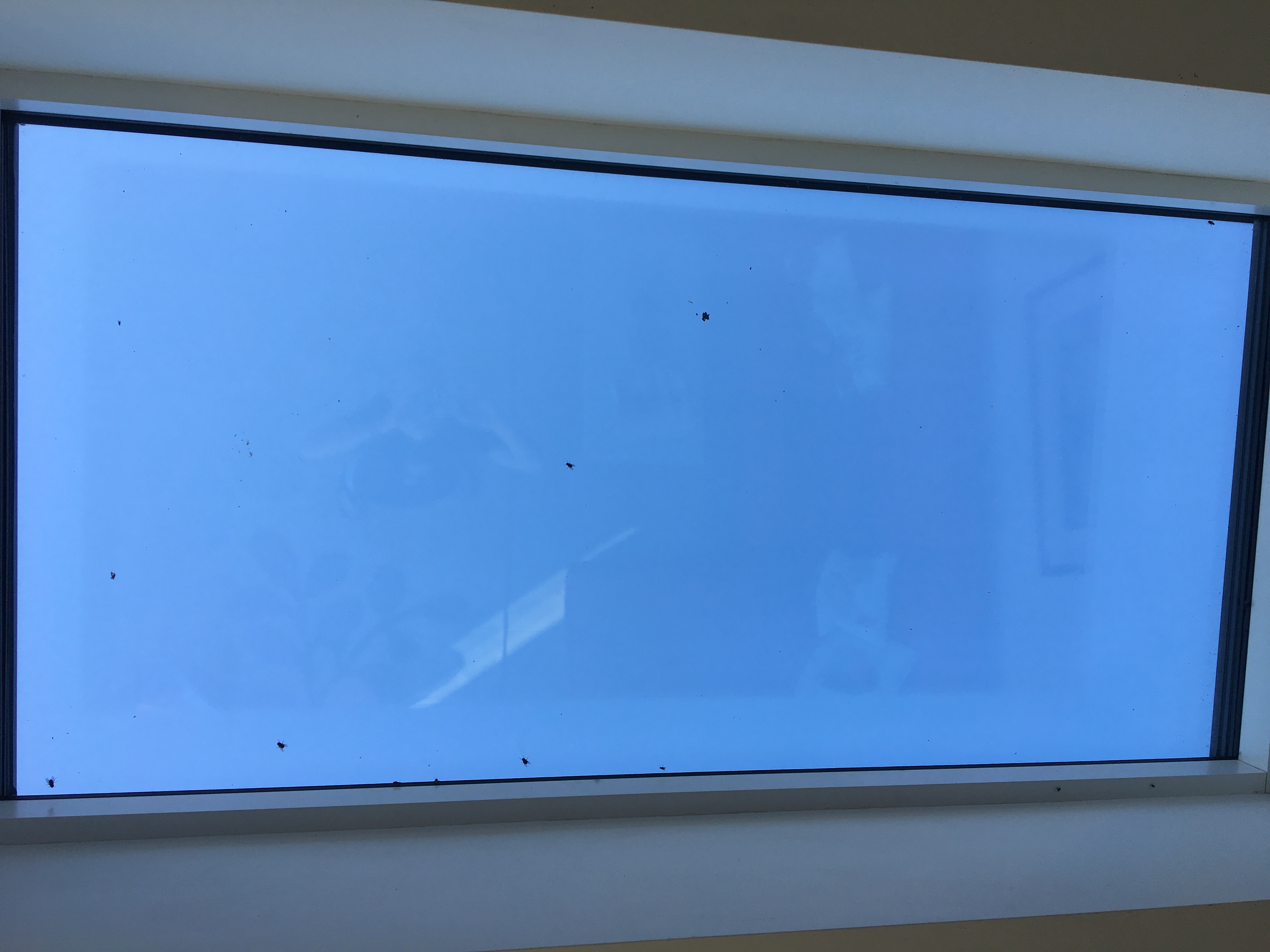
Flies looking at the sky the wrong way

It’s the beginning of the second half of the year, a chance to review how the first half went and figure out where we want to be by the end of the second half. A chance to step back for a moment, take stock and ask ourselves if we’re looking at things the right way.

There are lots of business books, concepts and parables to help us do this. One that comes to mind regularly is the parable of the boiled frog from Peter Senge’s book The Fifth Discipline. The story goes that the frog will react to sudden changes, like being dropped into boiling water, but will not notice and respond to gradual changes in temperature if you put it in cooled water which you then heat slowly.

I’d like to offer another parable: the fly in the skylight. We’ve all seen moths round a lamp or flies on a window. They’re both in search of the light. I was reminded of this recently when I noticed the skylight in our sun room. We were enjoying a spell of warm weather and this had drawn a number of flies inside and into the recess containing the skylight. You can probably see them in the picture. The flies can see the sky, their way out or so it seems. They will constantly bang against the skylight, searching for a way out, until they die of exhaustion and lack of food.

Their problem is that they’re looking at the sky the wrong way. They need someone to show them the open window or door lying a few metres away that are 100% better ways for them to get to where they need to go.

So as I embark on the second half of the year, I ask myself this question? Am I choosing the right path for trying to get where I want to go, or am I stuck in the recess, looking at the sky the wrong way and not noticing the glass which blocks my path?

Hope springs eternal

There was a famous sales book doing the rounds about ten to fifteen years ago, called Hope is Not a Strategy. In the interests of disclosure I should say that while I was working full-time in the area of sales effectiveness a decade ago I haven’t read the book. Suffice to say though that the author built a successful business around this concept that you need to plan and execute a sales strategy rather than hope a deal will come off.

The idea of a sales methodology is that you plan to a degree that removes – as far as is possible – things like hope or luck from entering into the decision as to where the customer awards their business.

Hope is good though. It’s good that hope springs eternal. We need hope, we need to hope. It keeps us going, keeps our head up, and keeps us feeling that onwards and upwards are just around the next corner or over the next rise for us. While we can’t legislate for the luck of the lottery, we can plan for and execute most other things so that we increase our chances of winning, success and happiness.

That’s why I’ve always liked the realist approach of the Jack Reacher character in the Lee Child novels. We hope for the best, and we plan for the worst. If we engineer it so that the worst case scenario is the bare minimum we’ll accept, and we plan around achieving at least that, then we should do pretty well, and with luck and hope, we might achieve even more.

As the publication of this blog post coincides with the remaining draw date in the ticket above, I’ll let you know if I win anything. I’m hopeful…