Archives for category: Marketing

[Disclosure – this blog post contains adult sexual references, though not expressed in a vulgar way, because that would be a poor show.]

I thought I’d open, dear reader, with a warning, as I’d hate to see your double espresso do a U-turn as you read this. The adult reference is not to the title of the well-known song that you will find in the subject line of this blog post (and I can imagine there might be a slightly different audience finding this post as a result) but to an analogy for the difference between sales and marketing.

The rivalry, jibes and sometimes gulfs between sales and marketing is a path so worn away with words that I hesitated before I wrote the post, yet I think my point has merit.

In the old days, you could say that marketing was like sex for 1. A mainly solitary exercise, you would be crafting strategy, messaging and plans in your own company. Sales, on the other hand, was like sex for 2. You were building a rapport with that person, listening and catering to their requirements.

The connected economy has blurred those lines almost beyond recognition. If I’m a salesperson, my B2B customers can do their research online, see how people score what I offer, without ever having to dance with me until they’re ready, and on their terms. I don’t sell to them until they’re ready to start the relationship – unless I understand how to use the same processes to guide them to me.

If I’m a marketer, while I should always have been listening to the market, I can get instantaneous feedback on what I’m putting out there and can collaborate with my customers in real time to give them what they need.

The best salespeople, marketers and customers are those that understand the leveraging power of the Internet and use it to put themselves in the shoes of the other person. That way they can relate to them more, and partner with them better.
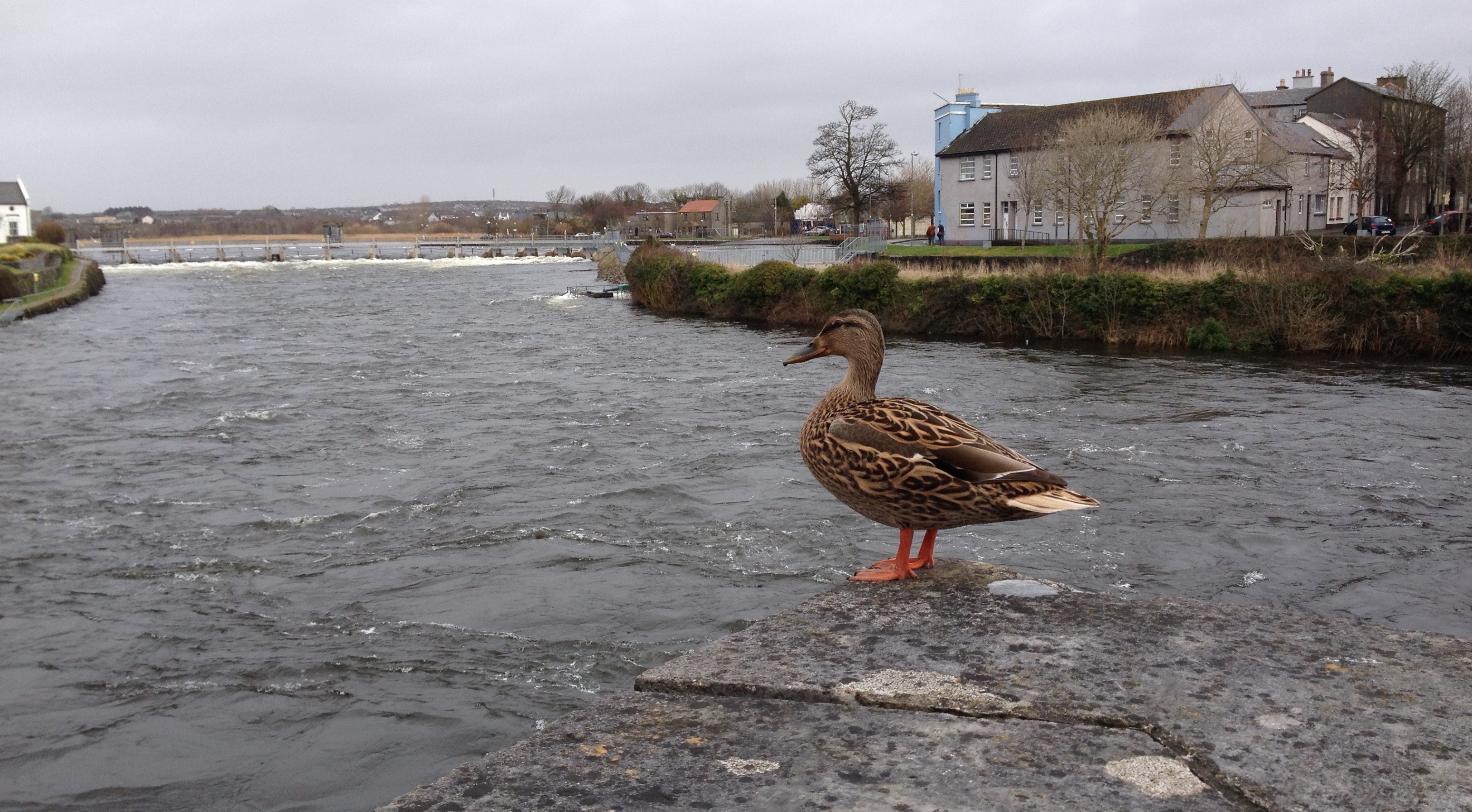

Yep, all this is mine...

Yep, all this is mine…

“Yeah, we own that customer…”

No you don’t.  You don’t own a customer, ever, and they don’t own you either. As a matter of fact, we share ownership of all that we consider ours: our house with various critters, our company with a bunch of stakeholders, and our real estate and world with an altogether different bunch of stakeholders. It’s like we share a view or a moment.

The sooner we get the notion of sharing into our heads, even in the commercial western world, we all work together better and we all profit. You don’t have customers, suppliers, or competitors, you have partners, and partners by their very nature share stuff.

I got a hand-written card today! From an organisation! I was so excited. The oblong hole in the front door is not just for bills after all.

Somebody had written me a personal thank you note and a different hand had written my name and address on the envelope too. This wasn’t from a friend or family; this was from a large organisation.

Yes, the good people – I always suspected they were good but now I know it – at Movember wrote to me personally to thank me for the huge sacrifice of growing a moustache for 31 days. Now there are thousands of people a year that raise money for this prostate cancer charity, and I bet we all got a hand-written thank you letter. Mine was from Sara and she signed it ‘Sara x’. Who cares if it wasn’t actually Sara, it’s the thought, and the perception, that counts.

I shall definitely grow a moustache for November 2014; they have me for another year, and another few hundred quid, with one thoughtful gesture.

Attention people who have customers – or people who want to stay on the right side of someone else: show you care by taking three minutes out of your day to write a card and envelope and why you appreciate them. You’ll need a stamp too of course, but if there is a better return for such a small investment, I don’t know what it is.

Incidentally, even if you’re not in marketing – or even business – you should dip into the daily genius that is Seth Godin’s blog. Here’s one of his best ever pithy-but-explosively-useful posts containing the handwritten thank you note.

Anyway, back to emails, the web and calls…

The Cleaner Fuel, Really?

The Cleaner Fuel, Really?

‘It does exactly what is says on the tin.’ A very well known advertising strapline that has served the company – and of course its customers – very well over the last few decades.

I’ve talked before about the importance of perception. Appearances mean a lot. We make judgements from them, we trust them. But what happens when those appearances let us down? Then we start to doubt the claims of the person or company and our trust starts to break down.

Wondering around my home town the other day, I noticed these fuel tanks hiding behind an environmental-looking faux bamboo fence within a housing estate. This is clearly the central place that serves the neighbouring houses with their fuel.

Even though this is the stuff we hide away behind walls, fences and floorboards, there is clearly an ironic and serious compromise of the brand promise going on when the container of of a fuel container is filthy, or filthsome as my offspring have recently coined.

As a marketeer, you have to protect and optimise every single touchpoint of your brand with your customers. While it’s true to say that a rising tide raises all boats, a hole in the net lets all the fish out too.

I was doing some work outdoors the other day, an activity for me about as common as seeing an eskimo in the Democratic Republic of the Congo. A spot of waste recycling and composting was my choice of chore.

Reduce, reuse, recycle is the adage they use to remind us of our environmental obligations. For me the rank order should be to reuse if you can, otherwise recycle, and if you can’t recycle, and it’s landfill city, then reduce as much as possible. Recycling is great, but there’s a fair amount of energy involved in washing or reconstituting the plastics, cardboard and paper.

Composting is a different story. It’s nothing short of amazing. I’d forgotten how amazing. Take your used tea bags, egg shells and uncooked food, stick them in a bin, and the passage of time plus some friendly worms transform it into nitrogen-rich compost to spread on your vegetable patches so you can reiterate the circle of life. Total out-of-pocket expenses on this process – excluding the sunk cost of your bin and any worms you add to the mix – zero. Beautiful, perfect even.

Marketing via the leveraging mechanism of the Internet is a bit like this. In the connected economy the cost of reproducing something that’s already been created tends towards zero. Once you have your compelling content, it’s relatively easy to recycle it automatically through your other social media channels, rework it, reuse it and keep benefitting from it. It’s the gift that keeps on giving.

You don’t have to wait for time to transform it into something else but do you need to allow time for your social media efforts to pay you back. But that bit you knew already.

In sales, there is a lot of complexity. A lot of moving parts, a lot of scenarios, a lot of things to measure. If you can’t measure, you can’t manage, so how to make sense of the data onslaught and focus on the really important stuff?

I used to work with a company called The TAS Group, who invented something called The Sales Velocity Equation to help with the problem. In this equation, anyone in charge of sales needs to focus on – and measure – just four things to get a sense of how successful their sales efforts are, and whether they are improving or not.

The four levers are the number of qualified opportunities your team works in a given period, the average deal size of the deals you win during that period, your win percentage, and the length of the sales cycle of all qualified deals before you win or lose them.

Your sales velocity – which is a measure of how effectively you sell – is a function of the top three levers multiplied by each other, divided by the all-important factor below the line, the sales cycle length. This gives you a dollars per week, month – however you measure your sales cycle – for a given period.

Consistency is the name of the game with this. You may know that I’m a big fan of consistency. You must be consistent in how you define the period (I recommend looking over at least a quarter) and in how you measure a qualified opportunity, otherwise you’re comparing apples and oranges. If your sales velocity increases from period to period, you’re selling more effectively. If it decreases, less effectively.

The key is to have an iron grip on your sales process and your sales cycles, because time is a killer and that factor below the line can kill all your good work elsewhere.

You can read more about this important topic here and here.

When I sit on a London-bound train and don’t want to shut the world away and write, like I’m doing right now, I like to soak up the ambience of my train carriage and home in on some of the mobile conversations that the less discrete business people tend to have after their meetings in the UK’s capital.

As well as the standard business shorthand phrases like ‘food for thought’, ‘keep moving forward’, ‘in this together’ etc. I usually have this unexplainable – as opposed to inexplicable – feeling of sadness wash over me. Not because I want to work where they work, but because of the inherent unproductiveness of big society where a mass of people mills around like atoms in a pan of boiling water.

All these people travel together with strangers into the big city, head to their specific meeting with their customer, partner or supplier, conduct their business, scurry back to their travel hub and head back home. They use the journey back for follow-up calls, post mortems, problems, solutions and actions, all within earshot and sight of another band of strangers.

And that, for me, is the modern big city: a vast collection of people on the move, in between things, trying desperately to minimise their A to B time and expenses. Whole industries built around a state of perpetual transience.

The promise of the Internet is that it can bring us together in ways that the phone never could do. Despite the advantages that the face to face element of Skype and video conferencing delivers, nothing has yet replaced the physical meeting as the pinnacle of human interaction and collaboration.

And hence the sadness. We crave interaction from our fellow humans, yet meeting them is all so inefficient. Teleportation would be extremely handy, but in the absence of that, I always wonder if there is a better way to co-ordinate these millions of criss-crossing journeys.

I think when I get back to my home office I’m going to stew on that and not come out until I have fixed it. Or in case someone wants to see me for a meeting

Tom Peters is the creator of what for me is one of the most insightful quotes in all of commercial history.

He wrote that ‘Perception is all there is.’ Is there anything truer and more important in marketing? It doesn’t matter what the reality is, what really matters is how people see and interpret that reality. The advent of the online world, which has increased our ability to transact remotely without face-to-face meetings where we can judge things like tone and body language, has brought this fact into sharper focus still.

Of course, companies with this knowledge can choose one of two paths. They can work hard to influence the prospect customer’s perception of their products and services in a positive and accurate way. Or, they can seek to alter their perception to one that is at variance with reality. In other words, they can mislead.

Fortunately, the Internet giveth and the Internet taketh away. Customers who find themselves on the unhappy end of a transaction can take to social media to vent their spleen and positively influence both the company and their target audience.

The Internet is all about perception, but it’s also all about immediacy and transparency.  Which is nice.

Our American friends are very good at making every moment count. Far from wallowing in the past or wishing their lives away until some happy event in the future, they encourage us to capitalise on what is current. Hence the familiar phrases like ‘being in the moment’ and ‘living for now’. This resonates in sports and is also especially true for business these days, when the emphasis is, quite rightly, on execution. You can only execute on the present tense; you can’t execute in the past or future.

That said, imagine what kind of a world it is for those people for whom there is only the present tense. There are millions of people with varying conditions of what is essentially an eternal limbo. Long term memory is OK for many, but for the majority the short term memory evaporates. Think about what this means.

There is no recent past. The couple of grand you spent on last week’s holiday, or yesterday’s dinner with friends, or this afternoon’s sports match are gone, as if they never happened. There is no future. You’re not looking forward to the weekend, because within a few minutes of being reminded of the delights in store, you’ve forgotten them.

You are literally in the moment, constantly, fleetingly, living from moment to moment. Do you even try to enjoy every moment to its fullest? Probably not, because you have to remember to do that…

I don’t have any wisdom or answers to offer here. But I do have a question:

If the present really was all you had, would you execute better on your work lives, social lives and family lives? Would you check out, or would you do your best every time? Here’s to option 2…

In this era of the long tail, it’s never been more easy to find, create, develop and service a niche market.

A niche is a small place that you can defend and protect from bigger competition who either can’t fit in the niche themselves or lever you out of it. Aside from the risk of the long tail niche – there is a gap in the market but is there a market in the gap? – I was reminded of how protectable a niche can be when walking on the beach with family yesterday.

We were collecting empty shells, and on several occasions we saw some limpets sitting in the cracks between rocks. These weren’t limpets stuck to the rocks in the normal way. They were empty shells with their edges were simply resting – or so we thought – between the folds of rocks. The spaces under them were not deep and impenetrable, they were shallow, maybe a centimetre or so of a recess. When we tried to pick them up, however, we couldn’t move them, even by levering a finger and a thumb under the entire limpet.

Even though they appeared to be resting on the rocks, the force of the storms from the last few nights had wedged them in, hard and fast. Added to that, the conical structure of the limpet was such that even though only a few millimetres of the limpet edge were touching the rocks on two sides, it could withstand any human attempt to remove it in one piece.

When we find the perfect niche, and we’re set up the right way, we can be impossible to dislodge.