Archives for category: Customers

We’re generally on the receiving end of irony. Things that end up being ironic are almost always not in our favour. Irony in business is the same. Commerce tends not to like irony. It likes to deal in good fortune and certainty where possible.

Towards the end of 2017 I finished the final draft of a book I’ve written on how we should deal with our lot in life and leisure if we’re generalists rather than specialists. People who can do a few things well, but are not standout in any one thing.

Since the end of 2017 I’ve been trying to find a agent to take on my project, get behind it and find a publishing deal. In other words, I’ve been trying to persuade a number of specialists that a book written about generalists is a worthwhile project.

The irony of this task is not lost on me. In fact it’s a constant companion. ‘If you’re only pretty good at a few things, why should I, who am great at this thing, take on a project, and why should readers read something, that is probably only pretty good, pretty well written?’

I’m going on holiday shortly for a couple of weeks, which necessitates having at least half a dozen blog posts ‘in the can’. Notwithstanding these literary guardians at the gate, I might publish a few pages of my book as posts, to see if I get any kind of a reaction.
I’ve blogged before about how we learn a new language or adapt to the local language. First, we pick up the vocabulary associated with the language or the locality. Then we adopt the syntax, the word order or phrasing of the people we interact with. Finally, we pick up the accent itself, and start sound like – or something more approaching that of – the natives.

I think too that a lot depends on how much of a linguistic chameleon we are. Does the chameleon choose to adapt skin tones to the surroundings, or is it subconscious, an automatic thing it has no control over?

After 11 years straight in the same country, I’m starting to properly lose the engrained English accent and take on the accent of Irish-English speakers. For some people it might happen earlier, for some it might almost never happen. How many people have you met who’ve been living in a foreign country for twenty years and still speak with a hugely noticeable foreign accent? Some of them must not want to change, some of them must be incapable of it.

There’s a strong element of consciousness to how quickly we adapt to the language or accent of the place that is not native to us. It says a lot about us as people. Do we want to stand out as different? Do we want to fit in, empathise, be one of them, because it’s good to make an effort but also makes it easier to get things in our favour? Or do we not care either way?

Necessity is the mother of invention, or so they say. Many good things can also come out of accident, confusion or a misunderstanding.

When I was working as an account manager in the marketing business, we came up with a public sector strategy to encourage people to claim the benefits they were entitled to with the strapline ‘money for nothing, cheques for free’. It was a line from a Sting and Dire Straits song that I actually thought was cheques for free, but was in fact ‘chicks for free’. My misunderstanding.

I have a potential new brand name for you.

The other day my mother and I were enjoying lunch at the house of one of my brothers. Admiring the crockery, my mother asked ‘this is nice, who’s this by?’, turning the plate over and squinting without her reading glasses at the brand. ‘Ah, EWOH’, she said.

‘I think it’s called HOME’, her daughter-in-law commented, ‘you must be reading it upside down.’

A funny moment for us all. The more I thought about it, though, the more I liked the new brand name ‘EWOH’, pronounced ee-woah.

Probably needs a bit more research…

The cost of parking is fast becoming onerous. Some would say it’s already reached that stage, and has done for a whille.

The other day I flew from Ireland to the UK, for €37 all in, including priority boarding and 2 cabin bags on the way back. The cost of parking, off site, with my car occupying 10 square metres of real estate in the middle of nowhere, ie Shannon long term? €42 for 7 days, booked in advance. Something’s not right there.

Quite recently while visiting in Bristol I went to the Cabot Circus shopping complex in the heart of the city to buy a sweatshirt for my daughter that wasn’t available anywhere else in the area. I was in and out of the multi-story in less than 30 minutes. The cost of parking? €3.

Do they not want you to park in town? Do they not want you to shop in their shops? Has real estate got to the stage where they need to cover their own high costs, or are they simply charging what the market will bear?

Parking has always been ludicrous in the city centres, but now, in off-site long-term parking where they have you over a barrel, it’s rapidly moving that way too.

A few years ago in Ireland the banks made a concerted effort to discontinue the cheque book, that tried and trusted method of paying for something. I’m sure there’s a serious cost attached to producing and sending out cheque books. And for us as cheque writers, we need to allow a certain time for the snail mail to deliver our cheque, and for the cheque to be cashed, cleared and deposited in the account of the person or business named on the cheque.

I don’t know why the move to remove cheques failed. Perhaps it was because we’re not all digital or electronic, or we prefer not to be, through distrust or tradition. It could be that the first effort to eradicate their use was a dry run to soften us up for a serious retry in a few years time.

I pay for the vast majority of my debts electronically. There is, however, a certain pleasure I get from writing and signing cheques. It’s part traditional, part physical, and part control.

Signing cheques is a link back to the way banking has been done for a long time. I write so little these days that I take a perverse pleasure in completing a cheque. I also feel in control of the process. I usually fill in the date first, then the payee, then the amount, before applying a flourish of a signature. I might also scribble a reference on the back of the cheque too.

Signing cheques is still symbolic to me, symbolising solidity, reality and authority.

The importance of focus is hard to overestimate. As salespeople and marketers, if we don’t focus we’re not successful. Better to do fewer things well. Better to win 4 out of 7 deals than win 3 out of 10, spreading yourself too thin and chasing bad deals that you shouldn’t be chasing. Focusing specifically on something means that you are actively choosing not to focus on other things.

Focus also relates to a post I wrote relatively recently on the power of positive thinking. If you think an eventuality is going to arise, if you can almost will it to arise, then you have more chance of seeing it arise. Visualising yourself hitting the treble twenty at darts, or hitting the outside corner of the service box, or winning that piece of business…

I recently read an article on the BBC website about the ‘quiet eye‘ and how it relates to the success of athletes, especially when the stakes and the pressure are highest. It has a lot to do with focus I think, both in a general sense and in a specific situation.

This ability to focus in the heat of battle is what defines and distinguishes the best athletes, the best sales people and the best marketers.

Today is the 4th of July. Or as our Americans friends say, July 4th. Happy July 4th, Happy Independence Day to Americans one and all.

Some celebration dates are easy dates, July 4th being an apposite example. Another is Cinco de Mayo, the 5th of May, which I gather is a big deal in Mexico. May the 4th, Star Wars Day, is yet another, a brilliant adoption and adaptation of the key line in the trilogy – actually it’s about an octology at this stage – namely May the Force Be With You.

Who remembers when St George’s Day, the patron saint of England, occurs, glossing over the fact that he was born in Italy, even among many English people? It’s not an easy date to remember, because the date isn’t in the name of the day. You can make a counter argument for Christmas Day, but that one’s got a good bit more global prominence and focus.

From a marketing perspective, the memorable – and rememberable – you make the day, the easy it is to market.

St George’s Day is the 23rd of April by the way. Just looked it up.

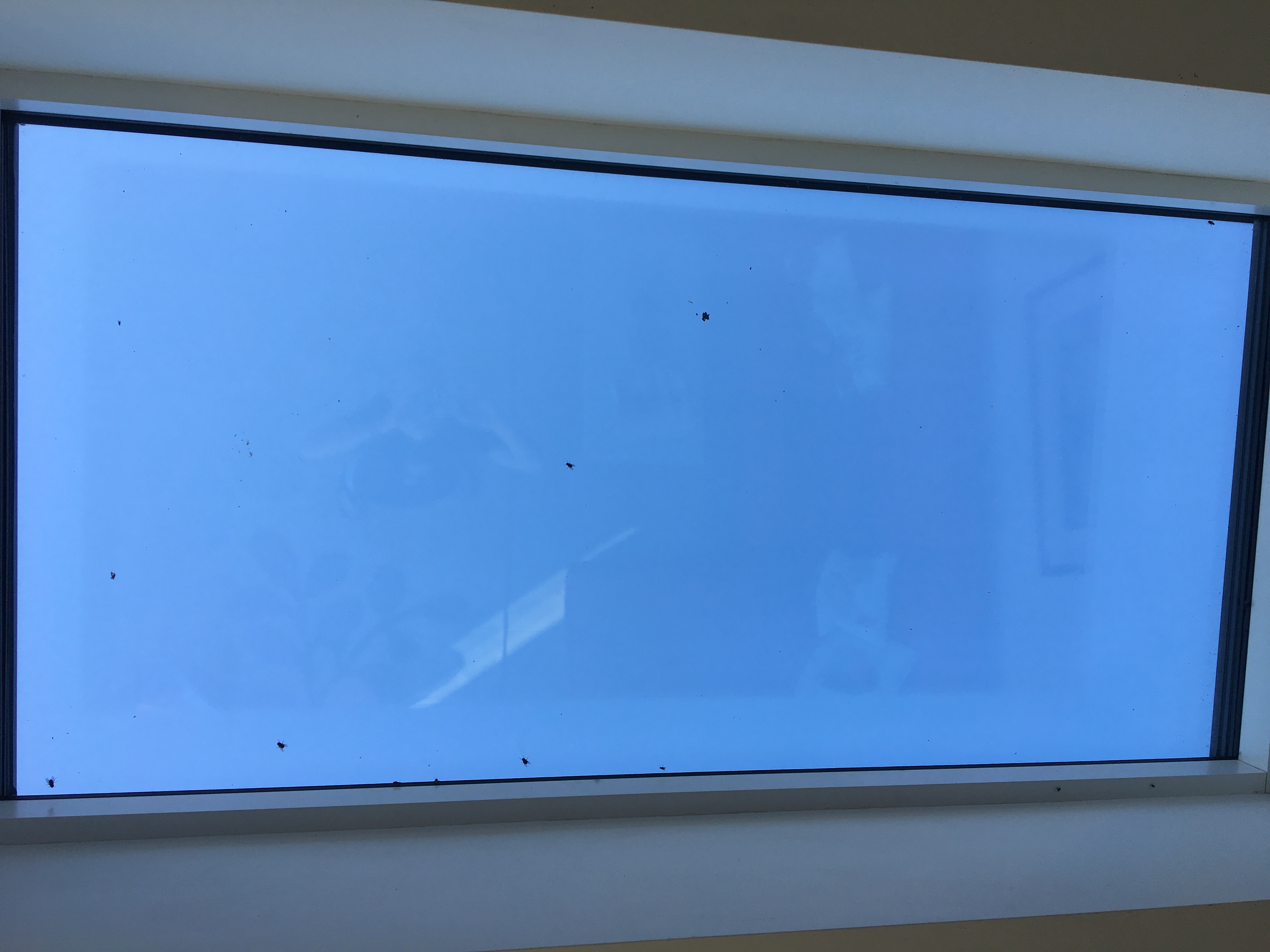
Flies looking at the sky the wrong way

It’s the beginning of the second half of the year, a chance to review how the first half went and figure out where we want to be by the end of the second half. A chance to step back for a moment, take stock and ask ourselves if we’re looking at things the right way.

There are lots of business books, concepts and parables to help us do this. One that comes to mind regularly is the parable of the boiled frog from Peter Senge’s book The Fifth Discipline. The story goes that the frog will react to sudden changes, like being dropped into boiling water, but will not notice and respond to gradual changes in temperature if you put it in cooled water which you then heat slowly.

I’d like to offer another parable: the fly in the skylight. We’ve all seen moths round a lamp or flies on a window. They’re both in search of the light. I was reminded of this recently when I noticed the skylight in our sun room. We were enjoying a spell of warm weather and this had drawn a number of flies inside and into the recess containing the skylight. You can probably see them in the picture. The flies can see the sky, their way out or so it seems. They will constantly bang against the skylight, searching for a way out, until they die of exhaustion and lack of food.

Their problem is that they’re looking at the sky the wrong way. They need someone to show them the open window or door lying a few metres away that are 100% better ways for them to get to where they need to go.

So as I embark on the second half of the year, I ask myself this question? Am I choosing the right path for trying to get where I want to go, or am I stuck in the recess, looking at the sky the wrong way and not noticing the glass which blocks my path?

Texture, I’ve concluded – and not before time I hear most of you say – is incredibly important to how we perceive things. While sales and marketing can do much to get us to the stage where we purchase a product, or evaluate it if it’s a large or involved purchase, it’s only when we sample the product first hand, in the flesh, that the final piece of the opinion we form about something seems to slot into place, or else becomes a jagged peg in a round hole.

Texture seems to be very closely linked to the senses of touch and taste. It directly feeds into them. It’s hard to taste something or feel something without being acutely aware of its texture.

I think this is why I have an issue with peanut and peanut butter. I love peanuts, their flavour and crunchiness. I cannot stand peanut butter. I can’t finish even one slice of bread with it. It feels wrong as a paste, even those versions that have bits in them. For me it’s totally the wrong texture.

We were on holiday in the US about a decade ago with American friends, and on a day-trip one of the guys kindly made sandwiches for us all. They were PBJ, peanut butter and jelly – or jam as we say in Europe – the staple of American living. I’m perfectly fine with jam in a sandwich. Jam is supposed to be a paste. Mix it with peanut better, and to me it’s simply wrong. It was all I could do to politely eat a couple of them without the contents reversing direction.

Take avodado and guacamole, on the other hand. I love them both. They feel right in both forms.

But peanut better? Yes, it must be the texture.

Hope springs eternal

There was a famous sales book doing the rounds about ten to fifteen years ago, called Hope is Not a Strategy. In the interests of disclosure I should say that while I was working full-time in the area of sales effectiveness a decade ago I haven’t read the book. Suffice to say though that the author built a successful business around this concept that you need to plan and execute a sales strategy rather than hope a deal will come off.

The idea of a sales methodology is that you plan to a degree that removes – as far as is possible – things like hope or luck from entering into the decision as to where the customer awards their business.

Hope is good though. It’s good that hope springs eternal. We need hope, we need to hope. It keeps us going, keeps our head up, and keeps us feeling that onwards and upwards are just around the next corner or over the next rise for us. While we can’t legislate for the luck of the lottery, we can plan for and execute most other things so that we increase our chances of winning, success and happiness.

That’s why I’ve always liked the realist approach of the Jack Reacher character in the Lee Child novels. We hope for the best, and we plan for the worst. If we engineer it so that the worst case scenario is the bare minimum we’ll accept, and we plan around achieving at least that, then we should do pretty well, and with luck and hope, we might achieve even more.

As the publication of this blog post coincides with the remaining draw date in the ticket above, I’ll let you know if I win anything. I’m hopeful…