Archives for category: Communication

My mother has rectangular dessert bowls that she uses for cereals, and, well, desserts.

They’re deceptively capacious. You cover the bottom of them with your cereal and barely dress them with some milk, and it feels like you’ve hardly got anything in there.

Nothing could be further from the truth. It got me thinking about unconventional approaches to things and how they can often take you by surprise. This can work in both good ways and bad.

In the case of flat bowls, you feel like you’re not eating much, when you’re probably eating more, a true double whammy and definitely the bad side.

That’s dietary peril for you. I’m sticking to small crockery from now on.


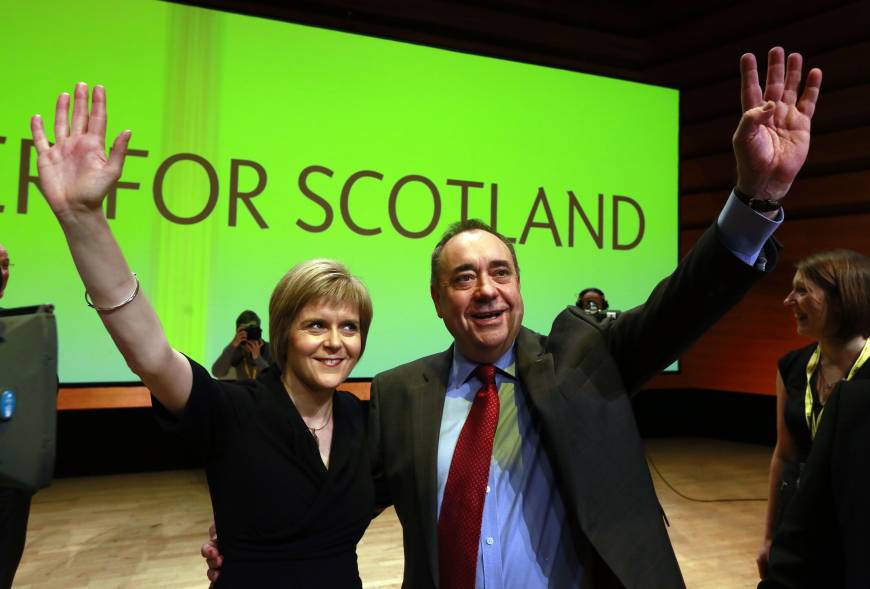
Image owned by Reuters via the Japan TImes

Image owned by Reuters via the Japan Times

I’m sure politicians get coaching on body language and mixing with the proletariat. It’s such an important part of the role; you can’t afford to be aloof these days.

What makes me surprised, then, is when you watch election results and vote count announcements, and the victorious politician, male or female, has to indulge in this straight-armed ‘martial wave’. It’s not quite Hitler-ish, but it’s not far off.

Perhaps they’ve been told that it makes them look authoritative and indicative of leadership potential. I can’t stand it, it’s all triumphalism and ego-basking, without so much as an ounce of humility, the true indicator of greatness.

Yes, the martial wave sets altogether the wrong tone for leadership. Why can’t victorious politicians, after a brief moment of relief or celebration, take a leaf out of the books of either soccer players or Chinese performing arts exponents, and clap their audience, the people who funded them or put them in the exalted position they are now?

The victory wave; you have to get it right.

‘Yep, give me 2 minutes, I’ll be right with you.’

Except that it never is 2 minutes. In Ireland, a couple minutes really does mean somewhere between 2 and 7, since the Irish world ‘cupla’ means ‘few’. When an Irish person says I’ll be a coupla minutes, you know what – and when – they mean.

In England we don’t have that luxury, so when someone says two minutes, or a couple of minutes, or 2 seconds, or 2 ticks, they never mean that, which is frustrating to the recipient because you feel like something else is more important than you, and you’re being put off because your priority is not theirs, when sometimes you need them for 10 seconds.

I used to work for a guy who made a point of being over precise in his expectation setting. He would say things like, ‘I’ll come back to you in 17 minutes,’ ‘I’ll be back at the hotel in 12 minutes, please order me a Cab Sauv.’ or such like. When he said it there was a hint of irony, but it served a useful purpose. More often than not he was there within a minute of the expected time he’d set. He would especially do this if he knew or picked up that you were pressured with one of your own priorities.

And do you know what? The useful purpose this ploy served was that it helped you, in turn, manage your time better.

It’s not always possible in the heat of battle, but it really helps others when you set a clear idea of when you’re available for someone who needs you. And if you can beat that time, thereby over-delivering on your promise, everybody wins.

The London Underground is a beacon of clarity in visual communication. The tube map, using the supreme Gill Sans typeface beloved of regional British railways in the art deco years, is a masterpiece of design and possibly the easiest-to-comprehend legend for a major city’s underground system in the world.

It makes it easy to move around the capital as both a tourist and a newcomer. OK, so sometimes it’s faster to walk over ground after you’ve factored in the subterranean distances you might cover changing lines – especially to the Central Line which is not so much in the bowels of the city as the bottom of the toilet pan itself – but that doesn’t matter. You can plot your journey from A to B with ease.

Except when you get to B that is, and the voice on the speakers instructs you to change at the next stop for another line or ‘alight here’ for somewhere well known and adjacent.

Alight? What is that all about? Is something on fire at this stop? Why do we settle for a word so arcane that we might as well be dismounting from our trusty steed? What’s wrong with ‘exit here’ ‘or leave the train here’ for Madame Tussaud’s or some such place? I can’t think what percentage of tourists have ‘alight’ in the armoury of their second, third or fourth language, but it can’t be many. It creates confusion. I’m all for the Reithian principles of educating one’s audience by driving the language in 6th gear, but not when it comes to the binary process of ‘help me decide if I get off here or not’.

No, the audio dimension of the London Underground falls short of the visual aspect. B-minus, could do better.

As marketers we can occasionally be accused of ‘dumbing down’ content or messaging. Dumbing down has a pejorative connotation these days, as though we’re being condescending or patronising to our audience by using words and language they understand. Sort of lowest common denominator stuff.

As craftsmen and craftswomen of words and pictures, our role is not to dumb it down. Our role is to communicate clearly. It’s about simplifying something complex, arcane or esoteric and making it both accessible and memorable. We should strive if at all possible to distil what we want to convey into one key message. Sometimes we only have that one chance to resonate with someone important to us.

This is because we remember some of what we hear, more of what we see, and the most of what we do, hence the need for something direct, engaging and simple. Our less understanding colleagues may feel that we’re ignoring the detail, avoiding industry jargon and acronyms that they can use as crutches, but that doesn’t work with our prospects and customers. They’re invested in something and they want to see some of that detail and erudition come out in the communication, but it’s lost on those we’re seeking to influence who are nowhere near as invested as we are.

Don’t think dumb, think simple. It’s not about ‘how can I oversimplify this’, but ‘how can I simplify it’. Dumb is foolish; simple is smart.

Simple really :-).

As a buyer, you want to be sure that a vendor’s sales person is telling you something rather than selling you something.

Sometimes it’s hard to discern whether a company has a specific product or service element that you’re looking for. Do they really have it, or they putting up ‘smoke and mirrors’ and giving you the impression they have something, when in fact they would have to build it, get it, or wriggle out of it if it’s not explicitly called out in the terms and conditions, should you become a customer?

Buyers who suspect they’re being sold not told on some important part of their requirements need to work hard to get to the truth. Ask direct, closed questions. Look for guarantees or break clauses if certain conditions aren’t met. Ask for references so you can ask both about the vendor’s performance and delivery generally but also about the specific thing that’s close to your wallet.

As a vendor, you really should subscribe to SWYG – sell what you got – or else be prepared to move the goalposts and persuade the buyer that they need something different, something you have. Selling what you don’t have is a recipe for strained relationships with both your customers and the other parts of your business. You’re simply building a rod for your back. If you don’t have close to what they need, nor are you likely to for some time, qualify out. It’s a bad fit for your business.

It’s better to be told than sold – for both parties.

I always thought that SAD syndrome – where you’re down in winter and up in summer – was related to dark, short days in the beginning and the end of the year for us northern hemisphere folk.

I think for me it’s more a nagging, low-level frustration than sadness. As I write this we’re emerging from my ninth consecutive winter in the west of Ireland. It’s been a very damp, windy, mild winter. This morning – April – it snowed. Anyone who knows about global warming will tell you that it doesn’t necessarily manifest in simply a warmer climate. It also increases the extremes of weather.

It rains a lot in the west of Ireland. While we’ve had our share of storms this last winter, you might be surprised to know that in terms of annual rainfall the figure here is half of the Seattle figure. We tend to get what the locals call ‘soft’ rain; drizzly, filmy, misty rain, falling out of predominantly light grey skies. In fact, it probably rains at some point during the day – perhaps some days a couple of drops, other days perhaps a dozen quick showers – 300 days of the year.

It never absolutely clatters down and then clears up, like in Florida during certain seasons. Precipitation here is an almost constant, gentle friend, with a slight smirk on its face. The kind of smirk you want to wipe away.

A B2B customer is far, far more important than a B2C customer. Let me tell you why.

I work from the home office quite a lot of the time. When I’m on a customer call, or a customer’s customer call, and there’s anyone in the house, I always warn them that I’m not to be disturbed unless the house is burning down.

A B2C customer is one customer, one consumer out of many. There are degrees here, of course, since some B2C customers are large or repeat customers, and spend much more money than one-off or small basket-size customers.

A B2B customer, however, doesn’t represent their own interests, they represent the interests of lots of other employees, who are in effect lots of other customers. They’re corporate and they have very, very deep pockets. And for that reason, they’re very important. If they take away their business from you, you lose an awful lot. If one consumer does, it’s no biggie.

A B2B customer call is like the red ‘On Air’ sign outside a broadcasting studio. You’re broadcasting to a large number of individuals and are not to be disturbed. One bad experience is immediately magnified throughout the entire audience – or company.

I’ve always prided myself on being honest and saying what’s on my mind. Not necessarily framed in a hurtful or undiplomatic manner, but one that leaves no room for misunderstanding. After all, people, especially customers, need to know what you’re thinking. They also need to be advised what they need to hear, not what they want to hear.

It turns out, of course, that the Brits have long been guilty of not exactly saying what they mean, as the table here will testify. I’m indebted to James Trezona of Rooster Punk for drawing my attention to this table, though the version I’ve shown is borrowed from here. In this sense it would seem that the Brits are similar to other peoples, like the Japanese for example, in eschewing direct feedback.

Anglo-EU Translation Guide

Anglo-EU Translation Guide


I do think, though, that this British habit of hiding behind the nuances of the mother tongue is gradually dying out. You could put this down to a bunch of mega trends I guess: globalisation, American cultural influences, the erosion of the British class system, our increasing inclination not to waste precious free time, to name but a few.

If it’s not dying out, then it’s certainly lessening from a bracing wind to a gentle breeze.

Or maybe something else is at work here? Maybe we’re not very good at delivering bad news. Maybe we’re too willing to soften the blow for our audience and ourselves. Either way, I think we’re getting better at that too.

There is, however, still sufficient truth in the table, and sufficient difference between what Brits say and what they mean – and differences between two situations is of course the root of humour – for it to be seriously funny.

It was Donald Rumsfeld’s phrased response to a White House question in 2002 that was to provide him with an excellent legacy and the title of a book. He distinguished between things we know we know, things we know we don’t know, and the unfathomable things that we don’t know we don’t know.

These are otherwise known – if you pardon the overused word – as the known knowns, the known unknowns and unknown unknowns.

I was tasked the other day with making sure the US version of a website was accurate, not just in terms of spelling and phrasing, but also used the correct terminology. My realisation that I had  not used the correct word for the US audience had already caused quite a bit of re-work and prompted a detailed pass through the US website to catch any further inaccuracies.

The problem was, you had to have worked extensively in that industry to know what the correct name was in the US, or whether they used the same descriptor as their UK friends.

So there were terms that I knew I knew, and the ones that I knew I didn’t know. Unfortunately, there were also bound to be terms that I didn’t know that I didn’t know, and they wouldn’t be spotted until it was too late. It’s the unknown unknowns that get you in business, as in many other things.

It’s bad enough having unknown unknowns in a fairly niche website with a few thousand visitors a month. Imagine having them for matters affecting entire countries and global relationships. Nasty.