I hate waste. Not using all of something where you have put in time and money to create it makes no sense to me. It’s all about striving for the 100% use of assets.

This is why I reheat tea and coffee I’ve been too busy to drink. Sometimes twice. Why not? It’s all about the efficient use of materials.

In my home we throw out a very small proportion of the things we consume. We’re lucky we live in a country where you can recycle many materials, and we compost both our fresh food and our cooked food (separately, of course). You’re working with the circle of life that way, not against it.

Where I’m most precious about waste, though, is with time, that most precious of commodities. I try to not to waste the time of others either. This is why I make my posts the length they are. I shoud be able to get my point over within a few short paragraphs. Many more would be a waste, and – who knows – you may hate waste too.
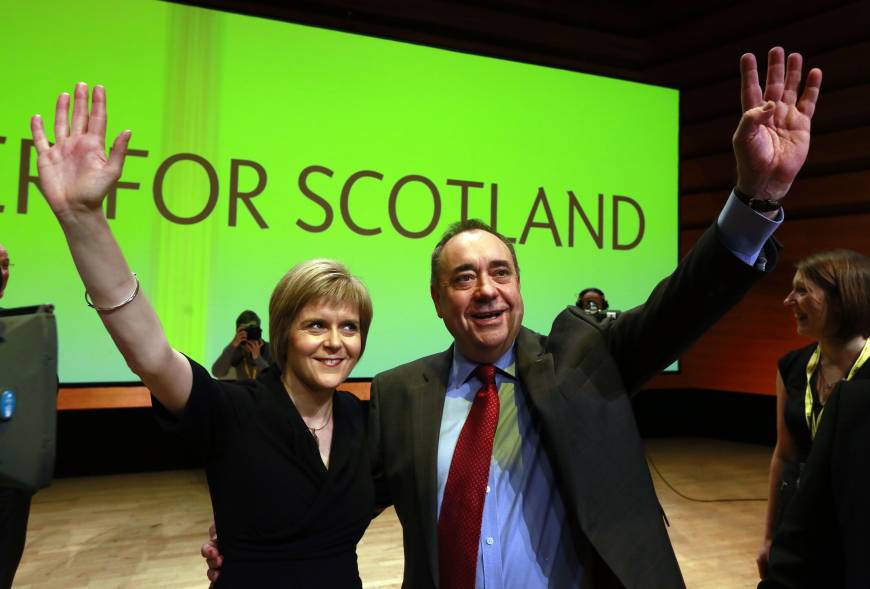
Image owned by Reuters via the Japan TImes

Image owned by Reuters via the Japan Times

I’m sure politicians get coaching on body language and mixing with the proletariat. It’s such an important part of the role; you can’t afford to be aloof these days.

What makes me surprised, then, is when you watch election results and vote count announcements, and the victorious politician, male or female, has to indulge in this straight-armed ‘martial wave’. It’s not quite Hitler-ish, but it’s not far off.

Perhaps they’ve been told that it makes them look authoritative and indicative of leadership potential. I can’t stand it, it’s all triumphalism and ego-basking, without so much as an ounce of humility, the true indicator of greatness.

Yes, the martial wave sets altogether the wrong tone for leadership. Why can’t victorious politicians, after a brief moment of relief or celebration, take a leaf out of the books of either soccer players or Chinese performing arts exponents, and clap their audience, the people who funded them or put them in the exalted position they are now?

The victory wave; you have to get it right.

Always a good one this, to remind ourselves periodically. Not just for entrepreneurs or people that have their own business. For people who are employed, people who are volunteers too.

Are you working in the business or on the business?

Are you fire-fighting or planning?

Are you thinking long term or pre-occupied with the short term?

Are you stuck in the weeds or looking over the parapet?

Are you servicing the business you won without also looking to snare the next piece of business?

Working in the business means we’re simply getting by, doing what’s in front of us, addressing the tactical. Working on the business means we’ve an eye on the future, we’re looking at opportunities, we’re being strategic.

It’s the opposite of the golf shot. As Gary Player once said, ‘If you look up too early you might not like what you see.’ In our working and private lives, if we look up too late, well, you get the picture.

Working in or working on? Eventually, there’s no ‘in’ if you don’t do the ‘on’.

‘Yep, give me 2 minutes, I’ll be right with you.’

Except that it never is 2 minutes. In Ireland, a couple minutes really does mean somewhere between 2 and 7, since the Irish world ‘cupla’ means ‘few’. When an Irish person says I’ll be a coupla minutes, you know what – and when – they mean.

In England we don’t have that luxury, so when someone says two minutes, or a couple of minutes, or 2 seconds, or 2 ticks, they never mean that, which is frustrating to the recipient because you feel like something else is more important than you, and you’re being put off because your priority is not theirs, when sometimes you need them for 10 seconds.

I used to work for a guy who made a point of being over precise in his expectation setting. He would say things like, ‘I’ll come back to you in 17 minutes,’ ‘I’ll be back at the hotel in 12 minutes, please order me a Cab Sauv.’ or such like. When he said it there was a hint of irony, but it served a useful purpose. More often than not he was there within a minute of the expected time he’d set. He would especially do this if he knew or picked up that you were pressured with one of your own priorities.

And do you know what? The useful purpose this ploy served was that it helped you, in turn, manage your time better.

It’s not always possible in the heat of battle, but it really helps others when you set a clear idea of when you’re available for someone who needs you. And if you can beat that time, thereby over-delivering on your promise, everybody wins.

The London Underground is a beacon of clarity in visual communication. The tube map, using the supreme Gill Sans typeface beloved of regional British railways in the art deco years, is a masterpiece of design and possibly the easiest-to-comprehend legend for a major city’s underground system in the world.

It makes it easy to move around the capital as both a tourist and a newcomer. OK, so sometimes it’s faster to walk over ground after you’ve factored in the subterranean distances you might cover changing lines – especially to the Central Line which is not so much in the bowels of the city as the bottom of the toilet pan itself – but that doesn’t matter. You can plot your journey from A to B with ease.

Except when you get to B that is, and the voice on the speakers instructs you to change at the next stop for another line or ‘alight here’ for somewhere well known and adjacent.

Alight? What is that all about? Is something on fire at this stop? Why do we settle for a word so arcane that we might as well be dismounting from our trusty steed? What’s wrong with ‘exit here’ ‘or leave the train here’ for Madame Tussaud’s or some such place? I can’t think what percentage of tourists have ‘alight’ in the armoury of their second, third or fourth language, but it can’t be many. It creates confusion. I’m all for the Reithian principles of educating one’s audience by driving the language in 6th gear, but not when it comes to the binary process of ‘help me decide if I get off here or not’.

No, the audio dimension of the London Underground falls short of the visual aspect. B-minus, could do better.

If I’m not mistaken, we’ve had a ruling monarch for the last 60-some years who is of the female persuasion. As a consequence the national anthem can slip effortlessly and with no loss of metrical harmony from God Save our Gracious King, to the queenly version and back again, depending on the gender of the current occupier of the throne. With me so far?

We’re also living through a period of unprecedented equalising – I will not say equality, because women have not achieved parity in a whole bunch of areas although the direction of change remains positive – in the relative position of women and their associated rights.

At the same time, there is in some quarters – such as the USA for example – a definite traction for using traditionally male nomenclature for certain professions. You hear ‘actor’ not ‘actress’, ‘waiter’ not ‘waitress’ a lot in the new world, for example. It seems strange that words like doctress for female doctor never caught on in the UK, whereas we wouldn’t use master when we meant mistress…but I digress.

It seems odd to me, therefore, that they don’t adapt the UK to the UQ, namely the United Queendom of Great Britain and Northern Ireland. Since UK folk have had a queen for more than half a century, would it not make sense to refer to the nation as a Queendom, in deference to Her Majesty’s gender?

You would have expected the most strident of feminists to have called for a renaming of the nation. Perhaps they have, in which case I’ve missed it. Alternatively, since we have actors of both sexes, can we not have Kings that way as well?

I’m quite pleased with myself. Today marks the point where I’ve gone 10 years without missing a working day due to sickness.

The last time I got sick was a rather nasty dose of viral meningitis. As luck would have it, it was over a bank holiday so I was only absent for work for 2 days. I can’t remember the last time I was sick before then. Alright, so I might have left work twice at around 4pm with a migraine, but not even a half-day ‘sickie’ has blemished my work attendance record for the last decade.

I’m not breaking any kind of health record here, and I’m not saying I’m the healthiest person that has ever lived either. What it boils down to is – yes – being fairly healthy, but more importantly it’s about culture and work ethic.

I’ve not had to suffer working in a large or public sector organisation where people play the system and take a sickie as if it’s their fortnightly right. These people are not invested in their organisation and those kinds of places would drive me mad. And as for the ‘oh, I’m staying at home, I don’t want to pass it on through the office,’ puh-lease. Those folks – and the colleagues and bosses that encourage them to do that – well, let’s just say it’s a different culture. The kind of culture that doesn’t think it’s their problem when billions of dollars of national productivity are lost annually through sickness. Plus, it’s no accident that incidence rates of sickness are far lower among the self-employed.

Many’s the time I’ve had a bit of ‘man flu’ or have poorly rebounded from a night of moderate imbibition, but you go in, you suck it up, take your meds and get on with it. If it’s a genuine illness – and I think meningitis scores quite well against that criterion – then, fair enough, stay away and get better. But if it’s not, then come on, gone are the days when organisations had the buffer to cover for a sick person. We’re all busy, we’re all maxed. Work is a team game and your colleagues are relying on you.

So I’m raising a glass to another 10 years of sickness-free work. Only the one glass though. It’s a school night and I don’t want to have to take a sickie tomorrow…

As marketers we can occasionally be accused of ‘dumbing down’ content or messaging. Dumbing down has a pejorative connotation these days, as though we’re being condescending or patronising to our audience by using words and language they understand. Sort of lowest common denominator stuff.

As craftsmen and craftswomen of words and pictures, our role is not to dumb it down. Our role is to communicate clearly. It’s about simplifying something complex, arcane or esoteric and making it both accessible and memorable. We should strive if at all possible to distil what we want to convey into one key message. Sometimes we only have that one chance to resonate with someone important to us.

This is because we remember some of what we hear, more of what we see, and the most of what we do, hence the need for something direct, engaging and simple. Our less understanding colleagues may feel that we’re ignoring the detail, avoiding industry jargon and acronyms that they can use as crutches, but that doesn’t work with our prospects and customers. They’re invested in something and they want to see some of that detail and erudition come out in the communication, but it’s lost on those we’re seeking to influence who are nowhere near as invested as we are.

Don’t think dumb, think simple. It’s not about ‘how can I oversimplify this’, but ‘how can I simplify it’. Dumb is foolish; simple is smart.

Simple really :-).

As a buyer, you want to be sure that a vendor’s sales person is telling you something rather than selling you something.

Sometimes it’s hard to discern whether a company has a specific product or service element that you’re looking for. Do they really have it, or they putting up ‘smoke and mirrors’ and giving you the impression they have something, when in fact they would have to build it, get it, or wriggle out of it if it’s not explicitly called out in the terms and conditions, should you become a customer?

Buyers who suspect they’re being sold not told on some important part of their requirements need to work hard to get to the truth. Ask direct, closed questions. Look for guarantees or break clauses if certain conditions aren’t met. Ask for references so you can ask both about the vendor’s performance and delivery generally but also about the specific thing that’s close to your wallet.

As a vendor, you really should subscribe to SWYG – sell what you got – or else be prepared to move the goalposts and persuade the buyer that they need something different, something you have. Selling what you don’t have is a recipe for strained relationships with both your customers and the other parts of your business. You’re simply building a rod for your back. If you don’t have close to what they need, nor are you likely to for some time, qualify out. It’s a bad fit for your business.

It’s better to be told than sold – for both parties.

‘Culture eats strategy for lunch.’ I love this phrase!

I hadn’t heard it in a while and was reminded of it recently in a meeting. It makes me laugh out loud when I hear it. It’s both pithy and witty. I don’t know if Peter Drucker did first coin the phase, but I think the sentiment rings true.

But why does culture eat strategy for lunch? My view on this is as follows: if all of your staff behave in the same way, and have the same attitude, and these behaviours are consistent with corporate culture, then whatever they execute is going to be done consistently too. They’re all pulling in the same direction, for the same things.

Strategy is only as good as the success, consistency and constancy with which it’s applied. When the culture’s not right, you don’t have everyone buying into the way things are done. It’s half-assed execution.

Culture is a bit like the goodwill you get from a brand. It’s hard to quantify but you know it’s important, you know it has immense value, and you want it for yourself or your business.

And that’s why culture never goes hungry.