Archives for category: Sales

In a recent post I explained that the 4 basic questions you need to cover when you introduce yourself is who you are, what you do, who you do it for and why it matters.

A really good follow up question from someone who is sufficiently engaged with you is ‘how do you do that?’ They’ll only care about the how if they’re genuinely interested or they’re making polite conversation. This got me thinking about how I would explain the process by which I get companies to accelerate their time to market and their sales growth.

Imagine holding an imaginary set of bellows or a concertina in your hands. Then you bring your hands together, before bringing them apart. That’s exactly what you do in sales and marketing to grow more quickly.

You have to reduce in order to increase. By that I mean that you start with your market, then you narrow down the segments of that market until you’ve identified the ideal target audience for what you do. Then you design your offering and your marketing and sales messaging to that audience. Because it’s tailored to the specific requirements of your tightly defined target audience, you have good success and you quickly grow your business or your new product or service.

So, how you do it is by reducing to increase. I imagine that the next time someone asks me how I do what I do I will accompany my explanation by the bellows or concertina hand actions, to reinforce my point.
When we’re introducing ourselves to people for the first time, even if we’re not in the selling business, there’s the opportunity to sell ourselves, to make a good first impression, or to influence people in a positive way. They might not need our services, or to be our friend, but they might know someone who does.

So what are the four introductory must dos? I see four questions that we should answer for the person we’re meeting:

  • Who? Who are you? What’s your name? Not necessarily the organisation you’re with, your name is more important. They have to remember it. I’m sometimes not a fan of leading with yourself, but in this case they need to remember your name when you accompany it with a handshake
  • What? What do you do? What do you provide? Can you describe this simply, without jargon? This is the bit that’s going to catch their attention, since they will use it to pigeonhole you in their mind
  • For whom? Who do you provide what you provide for? Who are your customers, stakeholders, patients, students or constituents?
  • Why? Why should the people for whom you provide what you provide care? What do they get out of it? This is the bit that adds value, your chance to say what makes you different

For some people, you don’t need to cover these four bases. “Hi, my name’s John Smith, I’m a dentist.” You can pretty much stop at second base. But for others, perhaps those in more complex business-to-business roles, you’ll probably need the last two, especially if you’re networking. “Hi, my name’s Paul Dilger, I’m a sales and marketing consulting to small to medium-sized companies so they can grow their business more quickly.”

If it feels unnatural to add the fourth point, you can always drop it into the conversation later, especially if the first three points resonate, make a connection or provoke a positive reaction.


I’ve just renewed a contract with my mobile telecoms provider. Along with the 2-year deal came a free upgrade to a better smartphone.

Not the latest smartphone, you understand, because I don’t need the latest smartphone. I’ve eased from an iPhone 6S to a 7. An improvement, I think. I got more data too, which is nice.

One of the ‘improvements’ of the 7 is that it does away with the circular port for the headphones. You get headphones with a firewire thingy that goes into the firewire charging port.

This means two changes in behaviour for me, none of them good. Firstly, it means I can’t charge my iPhone 7 and use it with the headphones at the same time, which I used to do a lot. Secondly, it means I need one set of headphones for my laptop (standard earphone port) and one set for my iPhone (firewire). I travel quite a bit, and now I need to pack two sets of headphones for any trip. Harrumph

Of course, I could spend more money on bluetooth earphones that will pair with both laptop and phones. Double harrumph…

The lack of time and thought invested in accessories compared to the base product is something I’ve blogged about before.

You can tell a lot from a handshake. First impressions and all that.

It’s not that the handshake is the only component of greeting someone. It’s the accompanying smile, the eye contact, the body facing the other person.

I once attended a corporate speaking engagement where the guy said the optimal time to clasp someone’s hand in a business handshake is 2 seconds. Anything shorter is a touch disrespectful, anything more is uncomfortable for the other person. Then there’s the angle of hand of the person leading the handshake. Palm down is a power play, palm up is subservient but also friendly.

As I said, it’s not only the handshake. It’s about eye contact, a ready smile, and physical engagement. I’ve seen people line up a handshake and actually be turned away for the moment of contact as they move onto the next person or thing. Not good.

When I shake someone’s hand, I extend my hand upright, with the arm at three-quarter length. A straight arm and they’re too far away, half arm makes them come into your personal space, another power play. My fingers are slightly splayed to stop someone gripping too soon and getting your fingers and none of your hand. I smile, face the person properly and apply a medium grip. If someone has a strong grip I increase my grip pressure; if a weaker grip I ease off on the grip. I don’t bother to adjust the angle of the power player’s or servile/friendly hand, as you’re advised to do. I simply go with it. Ladies and Gents, a medium grip is the minimum really. You don’t want to offer some a wet fish, and you don’t need a handshake like a docker’s vice to assert your personality.

Always good to say one’s name slowly to help the other person remember it. Telling them it’s good to meet them never hurts either.

Ask any business leader what their primary business challenge is and you’ll often hear words like ‘demand’, ‘pipeline’ or ‘more, better leads’. There are very few businesses that can rely on a never-ending stream of inbound enquiries from prospects or customers looking to buy.

Generating demand is generally the domain of the marketing department, although in business-to-business environments it’s not uncommon for the sales people to be expected to find or develop about half of the demand themselves. Many businesses therefore take a well resourced, scientific and automated approach to being in the right places with the right content to engage those people looking to fix a problem or exploit an opportunity.

Despite what you might have read from the minority of practitioners who’ve written or published ‘how to’ books, blogs or videos on the subject, while the principles are straightforward the practice is hard, especially when the business has a relentless demand for high quantity, high quality expressions of interest to keep its costs of acquisition at manageable levels. What often happens is that instead of demand generation you get demand degeneration, by which I mean a lack or shortfall of pipeline for your products and services.

What are the reasons for this? As you might expect, they’re many and varied. Incorrect market sizing, poor segmentation, a lack of understanding of the customer, inferior or inappropriate content, and insufficient or manually dependent activities are some of the common reasons. There’s also a requirement to stay current with trends and technologies in demand generation, since ways of engaging with customers have a natural lifecycle that means they won’t always be productive and will be replaced by new ways.

It takes a relentless drive and relentless inquisitiveness to engender relentless interest in something. That’s a pretty tall order to avoid demand degeneration, and the good business will recognise this and have in place parallel activities like customer advocacy to keep the pump primed.

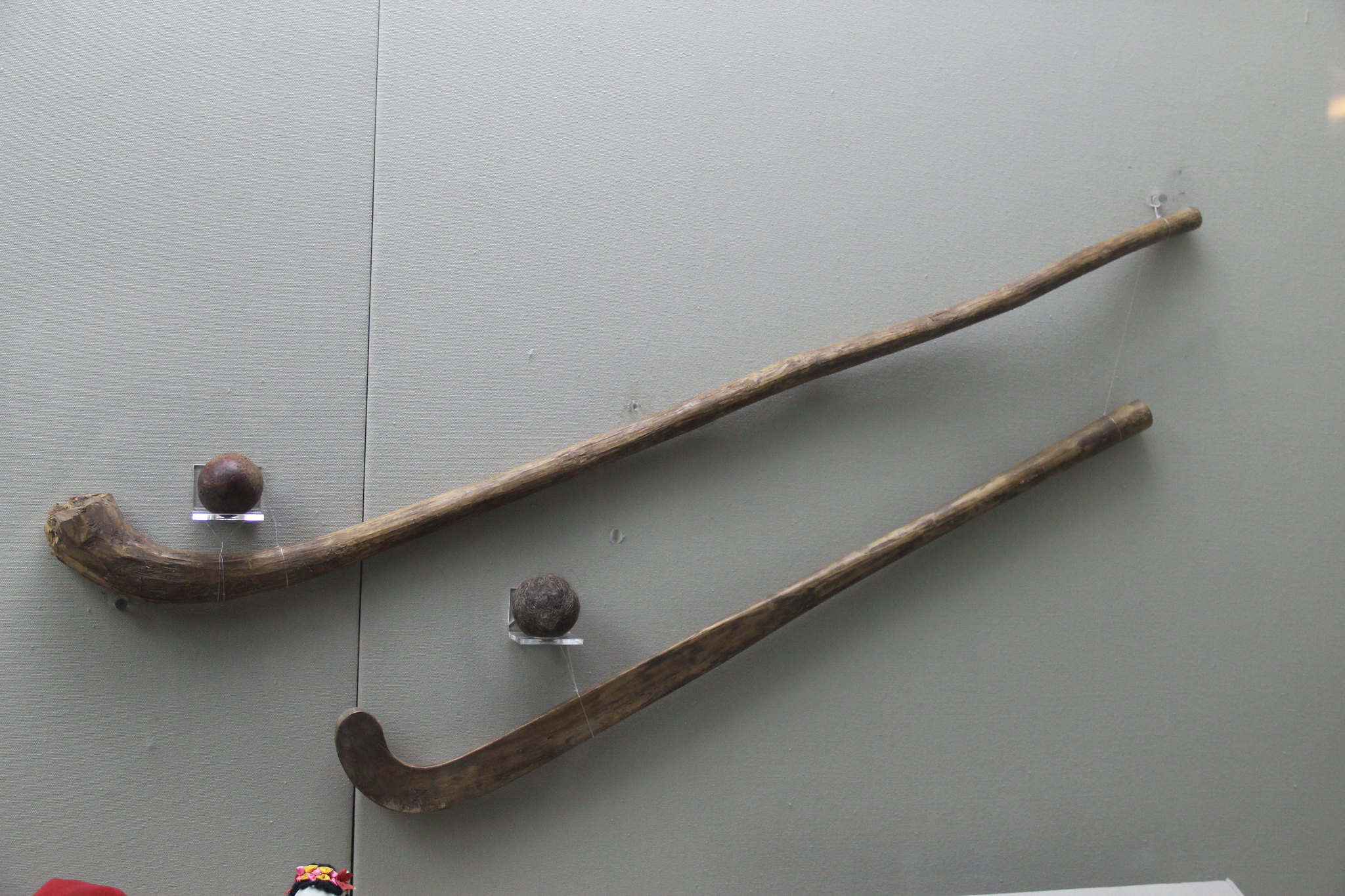
“Daur “Hockey” Sticks” by Gary Lee Todd, Ph.D. is licensed under CC PDM 1.0

I’ve been in business for a good 30 years or so. For most of those years I remained confused about a phrase that a lot of my North American colleagues used.

‘We’re looking for hockey stick growth,’ they would say, ‘that elusive hockey stick growth curve.’ This image always left me flummoxed. After all, who wants to see a massive downturn in growth before you see the upswing? You might not survive the downturn…

I finally realised that I wasn’t thinking about the right hockey stick. In fact I was thinking about the right hockey. Hockey, or ‘Ice Hockey’, to give it its full name, is hugely popular in North America, and has a flat bottom part and then bends up in a straight line, the sort of sales growth envied the world over.

In Europe, hockey is field hockey, not anywhere near as popular in North America, and uses a differently shaped stick with a curved part where you hit the ball. Not the shape you want for sales growth…

Confusion over!

The goal of underlying sales and marketing technology is that it is the slave, not the master, to your organisation. Automating your processes will enable you to embed and reinforce best practices throughout your organisation. The collection and inputting of good data and managing interactions for the complete customer journey will ensure you have visibility into your organisation, give you the insights to do accurate business planning and allow you to demonstrate your compliance.

Customer Relationship Management (‘CRM’) systems fulfil these responsibilities for your organisation. They are the machine to power your business, but are limited by the fuel you give them – in this case the quality and accuracy of information you import, enter and store. You can customise many CRM systems to suit your own business processes. You can also enhance them by integrating additional specialist software from third party organisations.

The CRM industry is extremely cluttered and competitive. There is a vast array of CRM systems, which vary appreciably in cost, functionality, reporting, flexibility, ease of use and size of their third party software ecosystem. It’s important to select the system which offers the best fit to your requirements and the long term vision you have for your organisation.

These 8 aspects will give you a solid structure to define your technology requirements, before shortlisting the alternative providers:

  • Your objectives for the technology
  • The functions within your organisation
  • The tasks you want to automate
  • The information you want to record
  • The metrics you want to measure
  • The users you want to enable
  • Their requirements
  • Your budget to accomplish these things

Think about your requirements as deeply as you can before you take the plunge. Companies often find that once they start using an implemented system there are additional things they didn’t think about that would have further influenced either their choice of system or how they customised and implemented it.

The best sales managers don’t micromanage their staff nor obsess over the numbers all day. The best managers have the right people on their team, all consistently selling the same way. They maximise their teams’ selling time and minimise their paperwork. They do structured deal reviews on key opportunities, offering advice and direction where needed.

They best sales managers focus on the few key metrics that determine success for their business. They champion the right behaviours and values. They call out their top performers and celebrate the example they lead. They forecast accurately and confidently, allowing the organisation to plan accordingly. They have the right technology in place to automate good behaviours and free themselves up to coach their teams.

Here are 8 areas that I think are key to great sales management:

  • How to design sales quotas, sales compensation and resourcing
  • How to do deal reviews
  • Pipeline values, composition and movement
  • Buying process, sales process and how forecasting relates to them both
  • How to define the behaviours and metrics for success
  • Pinpointing areas for improvement in individual sales people
  • How to conduct sales meetings
  • How to plan for growth

I’m sure there are others you’d want to add, but if you can master these 8, you’re well on your way to being the best sales manager.

How good are your sales people? How do they manage the sales opportunities and their existing accounts? You won’t be surprised to know that sales people need skills for the whole customer journey.

Here are the first 12 aspects that come to mind when selling to a new customer:

  • How they prospect
  • How they qualify
  • How they prepare
  • How they manage the calls, meetings, presentations and demonstrations
  • How they challenge the customer and manage objections
  • How they strategise on the opportunity and the competition
  • How they navigate the customer organisation
  • How they stay focused
  • How they win the customer
  • How they negotiate
  • How they close
  • How they hand over to implementation, support and account management

Within account management, the business of selling to existing customers, another half dozen aspects emerge:

  • How they grow the account
  • How they ask for referrals within the customer’s business and outside it
  • How they make the customer an advocate for the organisation
  • How they renew the customer’s business
  • How they do account planning for their key accounts
  • How they do account planning for their other accounts

Command of these different areas corresponds directly to the trust that the sales person establishes with their customers and the esteem with which they are held in the organisation and their industry.

Brand is the summation of everything we feel when we come into contact with an organisation, a product, a service or even a person. It’s a function of what we, see, hear, feel and consume. As such, brand is more than a logo. It is everything that helps form the customer or stakeholder experience. It manifests itself in its people, its products and services, and its interactions with you, the customer.

Profile is a function of how the brand is packaged and presented to the public domain. Public relations departments and agencies are responsible for managing and controlling profile in a way that’s consistent with the organisation’s mission. Here are a few things you should think about if you’re planning a launch or refresh of your brand and profile in the marketplace:

  • The vision for your organisation
  • Your mission to get you there
  • Your visual identity and accompanying strapline
  • The design guidelines around your identity and its products, services, promotional materials and documentation
  • Your current profile
  • Your desired profile
  • The activities you need to have in place to achieve your desired profile
  • Budget and timeframes for executing on the plan

This is also a great shopping list to take with you when working with a brand or image expert.