Archives for category: Sales

When we look back on our lives or our careers and contemplate some of the decisions we made that didn’t go according to plan, we have a tendency to rationalise them and explain them away. It makes us feel better. “Yep, that didn’t work out, but at least I know that industry’s not for me.” “Shouldn’t have bought that car, I’ll put that down to a learning experience.”

I use this ‘backward justification’ approach myself, by reasoning that every decision we make in life is a good one. It was good for some reasons, not good for others, and at least it was better than not making a decision at all, wasting precious time stuck in a rut. It’s better to have been proactive and have thought through the permutations and ramifications before deciding, but sometimes you just have to go.

In the marketing context this back-to-front way of thinking is similar to what we call ‘reverse segmentation’, and in business it can be very costly indeed. Segmentation is of course a really important part of plotting your own brand of world domination. It’s part of the ‘S-T-P’ holy trinity of marketing, namely segmentation, targeting, positioning. You segment your defined market, choose the segment or segments you want to target, and present yourself in the best light to those chosen segments.

How you segment is the $64,000 question. According to what criteria do you segment? If you’re going to segment along two key axes and plot your market or audience on a matrix, you had better get the two key criteria right, otherwise you might as well segment according to favourite type of pop music and preferred colour of pyjamas – unless you’re in the musical pyjama business. Lots of businesses, however, are not market-focused. They’re generally product focused. They develop a product which they think is great, then they try and find a market for it. This is also called a solution looking for a problem.

When you already have your product, it’s really hard to come up with objective segmentation criteria that don’t play directly to your strengths. This, dear reader, is reverse segmentation, and you might as well put your cart in front of your horse. It gives you an erroneous picture of where your market is heading and of your likely success. You’d be amazed how many companies do it!

When you learn how to write a press release, you’re taught to get the 5 W’s into the first para, because those short-attention-span journalists may not read any further if they don’t get drawn into your story. The 5 W’s are Who, What, When, Where and Why.

It’s still a great guiding principle if you write for the web, as the online world has driven all people’s attention spans down to the length of a journalist’s, with the result that someone else’s content is always a click away.

Of all the W’s, the last one is the most important. On balance, it’s the only one that really matters. The ‘why’ explains the connection.

Consider these questions in the customer context:

  • What’s in it for me?
  • Why should I care?
  • Where is my order? This is otherwise known as WISMO in ecommerce.
  • How could you pull that stunt?

Despite what you might think, these are all why questions. Your customers are not interested in the ‘how’, because that’s generally about you, and that’s not a major concern to them. They generally don’t want to know how you made the meal, or how you built the aeroplane they’re riding in, or how you came to design the software to work that way. They want to know why they’re being charged extra, why the release is late, or why they can’t have it in blue.

I was coming back from the UK the other day on a Ryanair flight. It wasn’t one of those flights in the 93% that arrive on time. It wasn’t close to being on time, it was horrendously late. In fact it was one of the 1% of their flights that was over an hour late. Now this is very unusual for Ryanair, and the first time in probably 50 flights I had been seriously delayed, but it was late on a Thursday evening, the last flight out, and I was tired and irritable.

The trouble was, Ryanair kept delaying the departure time and not saying why. Even an apologetic text to each passenger did not say why the flight was delayed, so you start getting frustrated, and these days that frustration can boil over onto social media so easily. When you trade on your punctuality and you don’t deliver punctuality, you’re a bad flight away from losing a frequent flyer, at least if they have a choice of airlines, which of course is not always the case. Monopolies and near-monopolies in small and developing countries is a topic for another post.

When we finally got into the plane, the pilot came on the intercom to apologise for the plane running 1 hour and 35 minutes late.  This was because – and ‘because’ is the corollary to the ‘why’ question as you know, dear reader – that the previous plane developed a fault that couldn’t be fixed so they had to despatch a replacement aircraft from Dublin over to the UK to bring us back to Ireland. Well, that’s fair enough, I thought, it happens from time to time, that’s pretty much unavoidable. The frustration soon dissipated after that.

But why on earth did they not come clean with the why sooner? You owe it to your customers to always be transparent and give them the why whenever you can. Early and often is the golden rule, rather like voting in corrupt countries. Your customers will continue to love you for it.

Ach, how to rid ourselves of the scourge of the self-servers, people who always put themselves ahead of others! In English, we say ‘I’m alright Jack’ to refer to these kinds of undesirable people.

In Irish, we call them ‘me feiners’. Here’s a good example of someone – a pretty laconic and articulate Kiwi as it happens, using the word to describe someone else.

It doesn’t matter in what walk of life or work you’re in, the me feiner is to be avoided, shunned even. They don’t pay back, they take but don’t give, they feather their own bed. If you’re in sales or marketing, you won’t last the course if you put yourself first the whole time. Success in those spheres is based on partnership, equity, balance, equilibrium. A fair exchange of effort, investment and reward.

You may be alright Jack, but not for long.

Poster Epic Fail

Poster Epic Fail

So much of communication is down to execution. If you get the execution wrong, your message is not received, not understood, and not acted upon. Remember the age-old AIDA acronym – Awareness, Interest, Decision, Action.

As I write this, we have some local and European government elections coming up. In the case of the candidate’s poster in the picture above, he – yes, the budding politician is male – is hoping to get your awareness that he’s standing for election, that you will connect with his message, that you will decide to vote for him, and that you will follow through on your decision on the appointed day in the polling booth, when the rubber meets the road.

Hence the epic fail in the picture. The poster has been like that for over a week. Whether blown that way in the wind, or put up that way for reasons that we will never know, the execution of the message has failed – miserably.

This is a lesson to all of us to check that we have executed the communication well. Did you get my message? Do you understand all elements of the proposal? Can you confirm we are OK to proceed?

Always look for confirmation that you can proceed at each step of a process. It’s the short cut to nailing success and avoiding misunderstandings.


As punk legend Ian Drury once rather succinctly put it in one of his songs: “There ain’t half been some clever b*stards.” Abraham Maslow was one such clever chap.  His Hierarchy of Needs has stood the test of time and appears somewhere in almost every business school’s sales, marketing or organisational behaviour curricula and most people have a passing knowledge of it.

My father used to simplify it further.  Before I share that with you, I have to say I don’t know if my Dad was familiar with Maslow’s theory, but he – my Dad – was always full of insights and was a classic mentor in the sense that someone who has already figured something out could give you the inside track on an important aspect of life.

Anyway, back to the simplification. My Dad used to say: “Paul,” for that is my name, “people are essentially motivated by two guiding principles. These two are fear and greed.” The more I thought about this, the more I came to the conclusion that he was annoyingly – and rather depressingly – on the money. You can distil how people behave down into two primary – and primeval – driving forces.

The words fear and greed don’t appear anywhere in Maslow’s handy pyramid – and how business consultants love the safe refuge of shapes like pryramids, triangles, funnels and 2 x 2 grids – yet what my Dad had done is cut through the pyramid and produced two possible avenues for explaining why folk do the things folk do.

Oversimplified? Possibly, but there’s not necessarily anything wrong with that. Just try it yourself. You could view it as a touch cynical or pessimistic, but it works. Forget the 7 deadly sins, you need 1 of them – greed – with the F of FUD thrown in for good measure.

The best sales people are those can combine the science of following repeatable best practice and the art – or perhaps even artistry – of skills like empathy, listening, charisma and intuition to the best effect.

From the scientific perspective, the old 6P adage holds true: Perfect Planning Prevents P*ss Poor Performance.  I don’t know if it’s really called the 6P approach, but if it isn’t then I’m happy to coin it so. The idea behind planning and analysing properly is that you factor out the things that can derail your deal, such as luck, as I’ve talked about before.

Where the art comes in is the judicious use of your experience, emotional intelligence and gut feel. Your intuition is often a powerful indicator of the likely result of a deal. Phrases like ‘I’ve got a bad feeling about this deal,’ or ‘something’s not quite right about this prospect and I can’t put my finger on it’ are sometimes a case of you not properly applying the scientific rigour to your sales approach. On other occasions, it’s your intuition working correctly and you should listen to it carefully.

I was reminded of this a few weeks ago, when I played soccer.  Being on the old-ish side for such a youthful pursuit, I’m alway careful that I warm up first. On this occasion, a perfect storm of circumstances had conspired to cause me to be late for the first time in years. Against all my intuitive feelings, I threw on a bib and got stuck in.  I started in goal, reasoning that after 10 minutes or so in this physically less demanding role I could venture out into the backs and work my way forward from there. After a few minutes of outfield play I could feel a dull ache in my right calf. It was not painful, but still I didn’t listen.

Five minutes later, with the ball in open space I sprinted off to claim it and – twang! – tore my calf, properly this time. I hadn’t done the prep, I didn’t listen to my body and I didn’t go with my gut.

Don’t let this happen to your ‘must win’ sales deal. If you’ve exhausted all scientific methods, listen to your art and follow your gut, like I didn’t.

PS This is my 100th post. I hope you’re liking it so far :-).

Doesn’t it drive you mad when you can’t easily open a pack of food or drink? Why don’t manufacturers of anything – especially food and drink – realise that getting at the contents before consuming is part of the customer experience, part of the product itself? They have to work harder at getting the balance right between securing the contents and providing access to them.

The packaging, as far as I’m concerned, is part of what Geoffrey Moore in Crossing the Chasm called the ‘whole product solution’. Admittedly, that book is about so-called ‘disruptive’ products, but you still have to get everything to do with your product or service right. This is something I’ve talked about before here.

If you don’t get it right, you run the risk of someone substituting your product for someone else’s. Someone else who has thought harder, and worked harder, about exactly how you are going to consume what they sell, from the moment you see it. For an old but hilarious packaging fail, have a look at this beauty and imagine yourself being the owner or captain of this business, demonstrating how easy it is to consume the product – not.


Pulling Out All the Stops

Pulling Out All the Stops

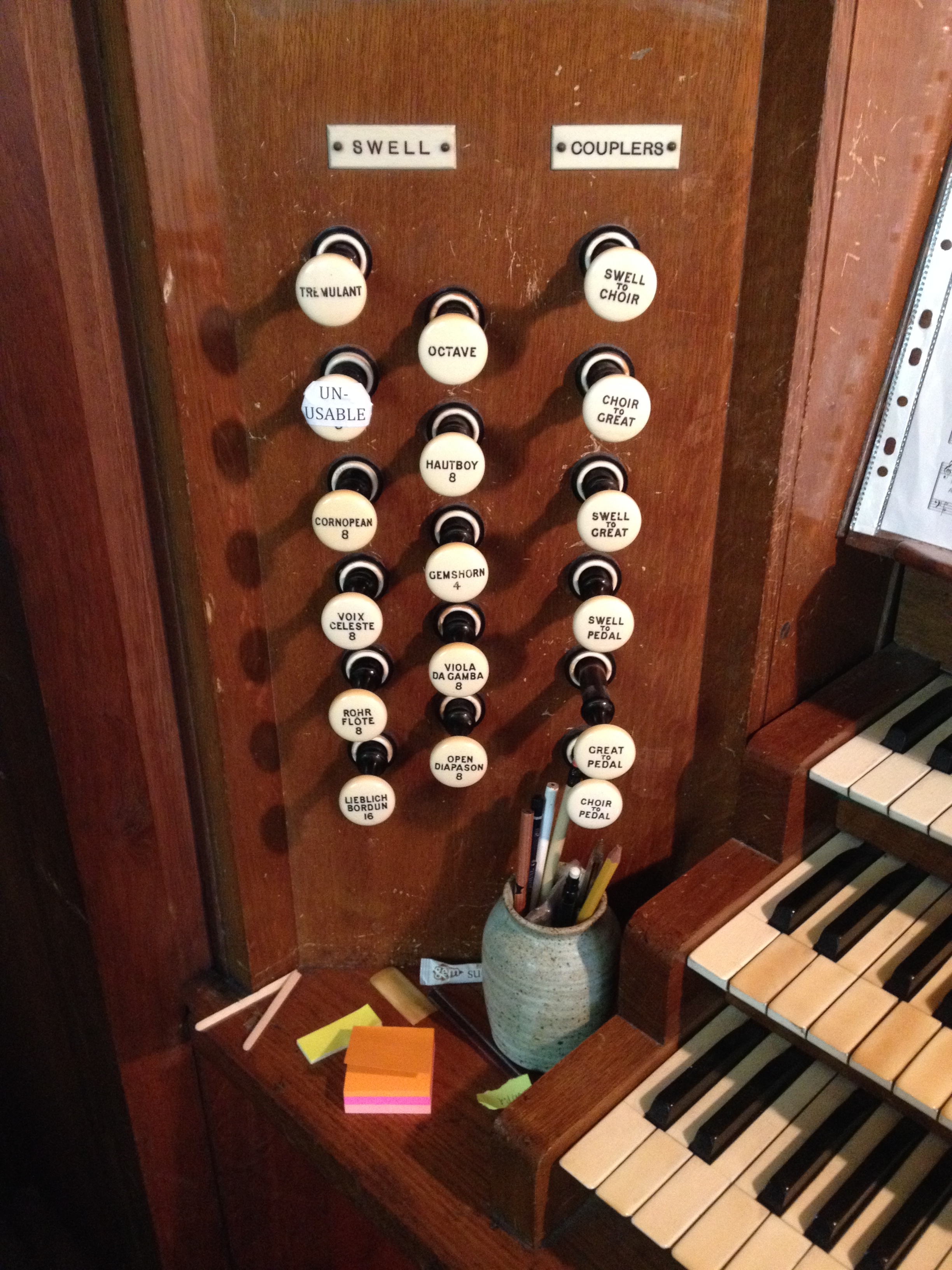
I was lucky enough to be invited together with my son to an organ recital recently.  It was a casual affair where you grabbed a tea and some cake and sat down for the recital cabaret style.

We turned up a little late and there were no tables left. All that was left was a row of seats about 10 feet – 3 metres my continental chums – directly behind the organist and his assistant. This afforded us an amazing view of all the work they had to do to pull off the rendition. There were three keyboard rows, a couple dozen pedals, and music papers everywhere that marked which organ stops had to be out for which piece of music. The more stops you have out – presumably; I’m no musician – the greater the range of different sound effects.

This got me thinking of the phrase ‘pulling out all the stops’ and how it relates to business. Pulling out all the stops means marshalling all the resources in your command and doing everything in your power to achieve something. If you’re in sales, there should only be one person you’re pulling out all the stops for.  It’s not you, and it’s not your boss. It’s your customer.

I know that sounds contradictory, but if you’re rooting for your customer and you’re their biggest advocate in your company, you will win big in the long run.

As a postscript, I accidentally published this post before the due date and a disappointed reader, met with a 404, sagely opined that perhaps I had pulled out too many stops. This is also true, you can pull out too many stops and put too much effort in for a sales opportunity. You need to balance the investment-reward equation.

In the high octane world of large deal size, long and complex sales cycles involving many buyers and influencers, there’s an awful lot to think about and an awful lot of work to do. It seems unfortunate, then, that forecasting such deals remains a black art, despite the technology in place focused on helping this tricky area. This is because the technology is simply the delivery mechanism, and if your data and discipline is weak, what it delivers is weak.

Many hours get taken up in forecast calls and meetings, with jargon like ‘drop dead’, ‘best guess’ and ‘upside’ permeating them and generally obfuscating the truth, or as close to the truth as we can manage. There’s a much bandied about statistic that forecasts are about 50% accurate. That means you might as well forget your forecast calls and flip a coin.

That doesn’t stop sales organisations around the world doing forecasts. Since your pipeline is really just an extension of your forecast, looking further into your future, it follows that for many organisations the pipeline really is a pipedream, a funnel full of fantasy.

Outside the world of complex sales – and who knows what proportion of all sales that is, maybe 80% – there are hundreds of thousands of sales organisations that don’t do forecasts or count pipeline. They don’t set quotas or targets, they might not pay commission, they don’t do deal reviews. They have folk out there selling and what comes in, comes in.

I don’t know how they can run their business with any confidence at all, especially in tough times. I think in general it’s a function of sales being so late to the top table in business. It’s something people have always done based on their intuition. Up until recently you couldn’t study sales at University or College. There was a marked absence of methodology, theory, training and formal structure. Compare this with the much newer profession of marketing which has the best part of a century’s curricular preparation under its belt.

So here, dear reader, are my top 6 pointers for a sales pipeline that means something to your business and that you can plan around:

1) Define what a sales opportunity is for your business. An opportunity is more than a lead. An opportunity is a lead + BANT, where your prospect has identified there is Budget, you’re speaking to the person with Authority, they have shared a Need for what you can deliver, and there is a Time by when they need to act. If it’s not an opportunity, it shouldn’t be in your pipeline. It’s not real enough and it clogs your pipeline with uncertainty and inaccuracy

2) Get a sales process. A sales process is a series of buying stages your customers go through to buy your stuff.  You might need a separate process for each group of customers buying a product or service from you. Lumping all your prospects into one sales process – unless you’re very lucky – will cloud and average out your data, which is not good

3) Define each stage. What needs to be in place on the customer’s side for the deal to be at that stage? Examples might be: the customer has agreed to an exploratory meeting; the customer has shared the BANT criteria; the customer has confirmed your price is acceptable

4) Get your reps’ to buy in to what you’re doing, so they contribute to refining the process and see the benefits of following and recording it

5) Make sure you have consistency across the business.  If your sales stages mean exactly the same to each rep – and they record their progress that way – you have consistent, reliable objective data in the forecast and pipeline

6) Make the technology easy to use, so it gives more back than your reps have to put in. You want to achieve the following virtuous circle: the more I use it – the better my information – the more deals I close – the more progress or money I make – the more I use it.  Hint: spreadsheets are not the answer, you need to use something browser-based so that there’s always a single up-to-date version.  It’s way too tedious for everyone otherwise

An accurate pipeline helps you plan for success and get early warnings of potential problems ahead. But you gotta get the basics right first.

The majority of sales organisations and sales people intuitively distinguish between two types of sales person and sales role. The hunter is the new business person who gets the deal with the new customer in the door and then moves on to the next. The farmer is the account manager who develops that account and nurtures the relationship.

The received wisdom is that each role is suited to a particular type of character. Some folk are suited to the rough and tumble of closing the deal, others are better at deepening the rapport.

Then there is another view, propounded principally by companies like The TAS Group who are behind the Target Account Selling methodology. They argue that the best, most strategic and most successful sales people are those who strategise on target accounts, figure out where the need is, develop the opportunity for a sale and then close the opportunity themselves.

Where do you stand on this? Are opportunity management and account management dedicated, specialised roles that should stay separate, or should they be part of a combined, more strategic role? The answer, of course, is that it depends, but I’d be interested in your views on the matter.