Archives for category: Marketing

When we look back on our lives or our careers and contemplate some of the decisions we made that didn’t go according to plan, we have a tendency to rationalise them and explain them away. It makes us feel better. “Yep, that didn’t work out, but at least I know that industry’s not for me.” “Shouldn’t have bought that car, I’ll put that down to a learning experience.”

I use this ‘backward justification’ approach myself, by reasoning that every decision we make in life is a good one. It was good for some reasons, not good for others, and at least it was better than not making a decision at all, wasting precious time stuck in a rut. It’s better to have been proactive and have thought through the permutations and ramifications before deciding, but sometimes you just have to go.

In the marketing context this back-to-front way of thinking is similar to what we call ‘reverse segmentation’, and in business it can be very costly indeed. Segmentation is of course a really important part of plotting your own brand of world domination. It’s part of the ‘S-T-P’ holy trinity of marketing, namely segmentation, targeting, positioning. You segment your defined market, choose the segment or segments you want to target, and present yourself in the best light to those chosen segments.

How you segment is the $64,000 question. According to what criteria do you segment? If you’re going to segment along two key axes and plot your market or audience on a matrix, you had better get the two key criteria right, otherwise you might as well segment according to favourite type of pop music and preferred colour of pyjamas – unless you’re in the musical pyjama business. Lots of businesses, however, are not market-focused. They’re generally product focused. They develop a product which they think is great, then they try and find a market for it. This is also called a solution looking for a problem.

When you already have your product, it’s really hard to come up with objective segmentation criteria that don’t play directly to your strengths. This, dear reader, is reverse segmentation, and you might as well put your cart in front of your horse. It gives you an erroneous picture of where your market is heading and of your likely success. You’d be amazed how many companies do it!

When you learn how to write a press release, you’re taught to get the 5 W’s into the first para, because those short-attention-span journalists may not read any further if they don’t get drawn into your story. The 5 W’s are Who, What, When, Where and Why.

It’s still a great guiding principle if you write for the web, as the online world has driven all people’s attention spans down to the length of a journalist’s, with the result that someone else’s content is always a click away.

Of all the W’s, the last one is the most important. On balance, it’s the only one that really matters. The ‘why’ explains the connection.

Consider these questions in the customer context:

  • What’s in it for me?
  • Why should I care?
  • Where is my order? This is otherwise known as WISMO in ecommerce.
  • How could you pull that stunt?

Despite what you might think, these are all why questions. Your customers are not interested in the ‘how’, because that’s generally about you, and that’s not a major concern to them. They generally don’t want to know how you made the meal, or how you built the aeroplane they’re riding in, or how you came to design the software to work that way. They want to know why they’re being charged extra, why the release is late, or why they can’t have it in blue.

I was coming back from the UK the other day on a Ryanair flight. It wasn’t one of those flights in the 93% that arrive on time. It wasn’t close to being on time, it was horrendously late. In fact it was one of the 1% of their flights that was over an hour late. Now this is very unusual for Ryanair, and the first time in probably 50 flights I had been seriously delayed, but it was late on a Thursday evening, the last flight out, and I was tired and irritable.

The trouble was, Ryanair kept delaying the departure time and not saying why. Even an apologetic text to each passenger did not say why the flight was delayed, so you start getting frustrated, and these days that frustration can boil over onto social media so easily. When you trade on your punctuality and you don’t deliver punctuality, you’re a bad flight away from losing a frequent flyer, at least if they have a choice of airlines, which of course is not always the case. Monopolies and near-monopolies in small and developing countries is a topic for another post.

When we finally got into the plane, the pilot came on the intercom to apologise for the plane running 1 hour and 35 minutes late.  This was because – and ‘because’ is the corollary to the ‘why’ question as you know, dear reader – that the previous plane developed a fault that couldn’t be fixed so they had to despatch a replacement aircraft from Dublin over to the UK to bring us back to Ireland. Well, that’s fair enough, I thought, it happens from time to time, that’s pretty much unavoidable. The frustration soon dissipated after that.

But why on earth did they not come clean with the why sooner? You owe it to your customers to always be transparent and give them the why whenever you can. Early and often is the golden rule, rather like voting in corrupt countries. Your customers will continue to love you for it.

One of my most fun projects over the last year or so has been to help a company in the ecommerce business with a few product marketing challenges. As a result of writing and blogging on their behalf, I’ve come to know the industry pretty well.

One of the factors that really drives the industry is customer service. This is because everything revolves around the buyer experience, so that people can find what you’re selling, select it, pay for it, receive it, consume it and come back for more as often as possible. Competing on price can often become a race to the bottom and a loss-making business, so your chief competitive weapon is continuous customer delight.

This sounds pretty simple. It gets less simple when you want to sell your product in more marketplaces, because then you have more portals to manage stock levels for, and more places to manage your customer service communications from. Technology comes to the rescue in the form of software platforms that allow you to centralise your stock control, orders, shipments and most important of all customer communications, in one place.

Interestingly, the vast majority of us all are also online consumers, so at an anecdotal level we know what it’s like to be on the end of exemplary or excremental service. Which brings me to the reason for this post.

About three months ago I succumbed to a Living Social bulletin advertising, of all things, dental floss heads at a ludicrous discount. In Ireland, these offers tend to be from UK companies, so you then have to stump up for the shipping as well. Except, it’s not so straightforward. Sometimes, you contract with Living Social to buy the product, then with your special code you then go through to the vendor’s website to arrange and pay for postage directly with them. The first time I couldn’t get the website to accept any of my credit cards, so I had to raise a ticket with them and Living Social, who referred me back to the vendor. Two weeks later, I managed to get the website to accept my credit card and take the requisite amount.

A month later, no floss heads. I sent a pithy email to their support centre to say that I had never received them.

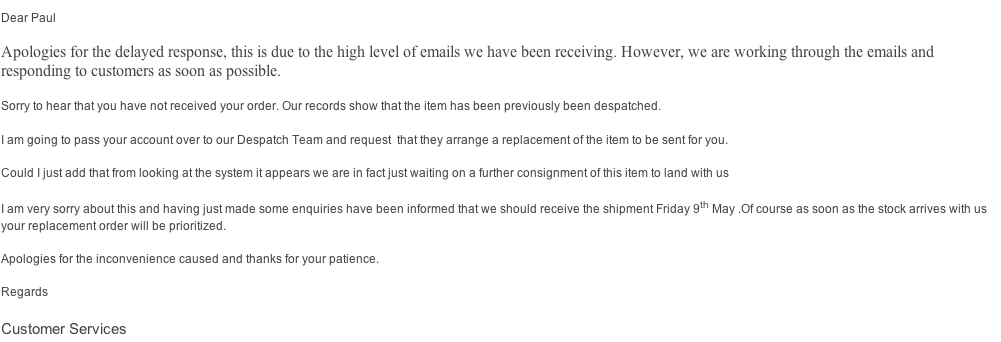
How Not to Do Customer Service

How Not to Do Customer Service

This is what I got back. A loose collection of standard responses and qualifying comments pasted and patched together in different typefaces, masquerading as a considered reply to my problem. I didn’t hold out much hope. They’re either appalling at customer service, or too busy correcting hundreds of undelivered orders, or both, with one being a consequence of the other. Suffice to say, I haven’t got my floss heads yet. These days though, being woeful – or woegious as my Irish friends say, one of my top ten new words of the last decade – is a very dangerous game, because it’s easy for buyers to rate their experiences and influence other buyers. We all know that folk don’t ask vendors for a recommendation, they ask their peers, and the online world makes this a breeze.

I’m too nice, and too tolerant to make a big fuss. But that’s about to change. They have my money and Mr Nice is about to become Mr Nasty. The online pen is far mightier than the sword :-).


Ach, how to rid ourselves of the scourge of the self-servers, people who always put themselves ahead of others! In English, we say ‘I’m alright Jack’ to refer to these kinds of undesirable people.

In Irish, we call them ‘me feiners’. Here’s a good example of someone – a pretty laconic and articulate Kiwi as it happens, using the word to describe someone else.

It doesn’t matter in what walk of life or work you’re in, the me feiner is to be avoided, shunned even. They don’t pay back, they take but don’t give, they feather their own bed. If you’re in sales or marketing, you won’t last the course if you put yourself first the whole time. Success in those spheres is based on partnership, equity, balance, equilibrium. A fair exchange of effort, investment and reward.

You may be alright Jack, but not for long.

Poster Epic Fail

Poster Epic Fail

So much of communication is down to execution. If you get the execution wrong, your message is not received, not understood, and not acted upon. Remember the age-old AIDA acronym – Awareness, Interest, Decision, Action.

As I write this, we have some local and European government elections coming up. In the case of the candidate’s poster in the picture above, he – yes, the budding politician is male – is hoping to get your awareness that he’s standing for election, that you will connect with his message, that you will decide to vote for him, and that you will follow through on your decision on the appointed day in the polling booth, when the rubber meets the road.

Hence the epic fail in the picture. The poster has been like that for over a week. Whether blown that way in the wind, or put up that way for reasons that we will never know, the execution of the message has failed – miserably.

This is a lesson to all of us to check that we have executed the communication well. Did you get my message? Do you understand all elements of the proposal? Can you confirm we are OK to proceed?

Always look for confirmation that you can proceed at each step of a process. It’s the short cut to nailing success and avoiding misunderstandings.


As punk legend Ian Drury once rather succinctly put it in one of his songs: “There ain’t half been some clever b*stards.” Abraham Maslow was one such clever chap.  His Hierarchy of Needs has stood the test of time and appears somewhere in almost every business school’s sales, marketing or organisational behaviour curricula and most people have a passing knowledge of it.

My father used to simplify it further.  Before I share that with you, I have to say I don’t know if my Dad was familiar with Maslow’s theory, but he – my Dad – was always full of insights and was a classic mentor in the sense that someone who has already figured something out could give you the inside track on an important aspect of life.

Anyway, back to the simplification. My Dad used to say: “Paul,” for that is my name, “people are essentially motivated by two guiding principles. These two are fear and greed.” The more I thought about this, the more I came to the conclusion that he was annoyingly – and rather depressingly – on the money. You can distil how people behave down into two primary – and primeval – driving forces.

The words fear and greed don’t appear anywhere in Maslow’s handy pyramid – and how business consultants love the safe refuge of shapes like pryramids, triangles, funnels and 2 x 2 grids – yet what my Dad had done is cut through the pyramid and produced two possible avenues for explaining why folk do the things folk do.

Oversimplified? Possibly, but there’s not necessarily anything wrong with that. Just try it yourself. You could view it as a touch cynical or pessimistic, but it works. Forget the 7 deadly sins, you need 1 of them – greed – with the F of FUD thrown in for good measure.

Doesn’t it drive you mad when you can’t easily open a pack of food or drink? Why don’t manufacturers of anything – especially food and drink – realise that getting at the contents before consuming is part of the customer experience, part of the product itself? They have to work harder at getting the balance right between securing the contents and providing access to them.

The packaging, as far as I’m concerned, is part of what Geoffrey Moore in Crossing the Chasm called the ‘whole product solution’. Admittedly, that book is about so-called ‘disruptive’ products, but you still have to get everything to do with your product or service right. This is something I’ve talked about before here.

If you don’t get it right, you run the risk of someone substituting your product for someone else’s. Someone else who has thought harder, and worked harder, about exactly how you are going to consume what they sell, from the moment you see it. For an old but hilarious packaging fail, have a look at this beauty and imagine yourself being the owner or captain of this business, demonstrating how easy it is to consume the product – not.


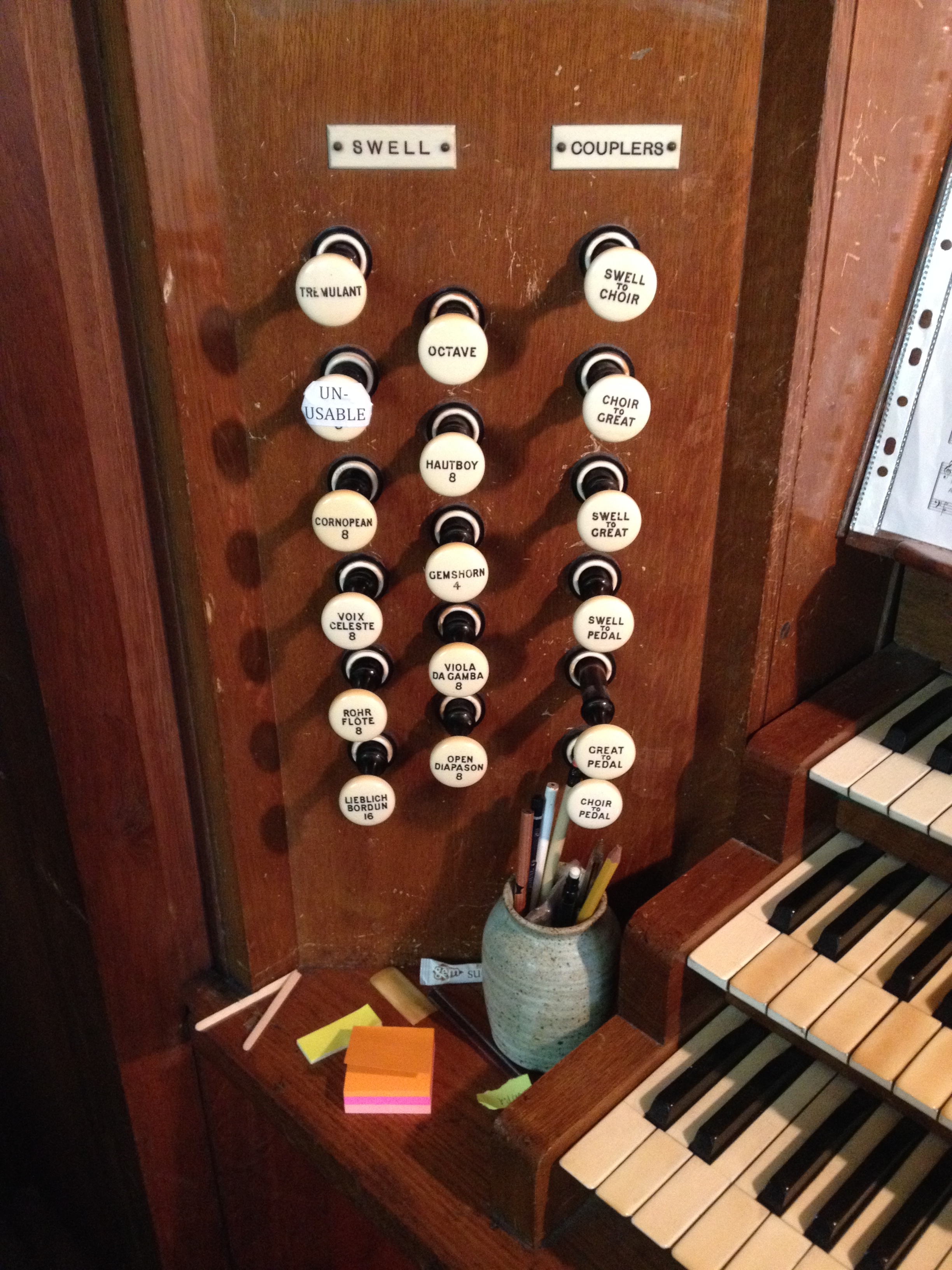
Pulling Out All the Stops

Pulling Out All the Stops

I was lucky enough to be invited together with my son to an organ recital recently.  It was a casual affair where you grabbed a tea and some cake and sat down for the recital cabaret style.

We turned up a little late and there were no tables left. All that was left was a row of seats about 10 feet – 3 metres my continental chums – directly behind the organist and his assistant. This afforded us an amazing view of all the work they had to do to pull off the rendition. There were three keyboard rows, a couple dozen pedals, and music papers everywhere that marked which organ stops had to be out for which piece of music. The more stops you have out – presumably; I’m no musician – the greater the range of different sound effects.

This got me thinking of the phrase ‘pulling out all the stops’ and how it relates to business. Pulling out all the stops means marshalling all the resources in your command and doing everything in your power to achieve something. If you’re in sales, there should only be one person you’re pulling out all the stops for.  It’s not you, and it’s not your boss. It’s your customer.

I know that sounds contradictory, but if you’re rooting for your customer and you’re their biggest advocate in your company, you will win big in the long run.

As a postscript, I accidentally published this post before the due date and a disappointed reader, met with a 404, sagely opined that perhaps I had pulled out too many stops. This is also true, you can pull out too many stops and put too much effort in for a sales opportunity. You need to balance the investment-reward equation.

I can’t explain it either, but it’s fascinating.

Why is St Patrick’s Day celebrated in such style and with such fervour in so many places around the world? Ireland boasts a diaspora of 70 million people, but that can’t be anywhere near the largest. Only the Chinese New Year comes close, and we’re talking about a national powerhouse of 1.4bn souls, fully 350 times Ireland’s population.

Paddy’s Day – and that’s not a pejorative term by the way, not is it ever St Patty’s Day, my American friends – doesn’t even occur on the weekend most of the time, yet still hundreds of thousands of Americans take a holiday to celebrate it and their Irish ancestry.

Ireland – and I’m talking about the Republic here; I’m mildly embarrassed to admit I don’t know much about Northern Ireland, except that it has great tourism advertising – seems to have cultivated the art of charming the pants off you while taking ever so small liberties. For example:

– a corporate tax rate that is the envy of most countries except the ‘offshore’ ones and the bane of the EU’s life

– peaceful nation status with a peace-keeping force, for the best of both worlds

– a genuinely warm welcome unless you’re English (an 800-year reversal of fortunes, let’s not go there) and then if you are it’s a genuinely warm welcome until they know you better

– the high wire act of leveraging a world renowned stout without getting bogged down by unhelpful links to alcohol and its abuse

– genuinely friendly and talkative while also using swear words like definite articles

– cutting edge in areas of business like IT, and antediluvian in its tolerance and memory of shady business and political practices

– great on innovation and entrepreneurship, less so on infrastructure and healthcare

– lovely scenery, without ever being out-of-this-world lovely as boasted by other countries 

For all these reasons Ireland is the most transportable of brands and punches way above its weight in cultural and touristic terms. How this translates into the global transplanting of Paddy’s Day once a year – beats me. I do love living here though…

A while back I wrote a post on how a sound can instantly bring you back to a time gone by. It can evoke a feeling in much the same way as a distinctive smell can.

The other day, I was watching the Champions League footie on the television and they were having some sound issues. The noise cancelling function of the commentators mike wasn’t working, so it was picking up crowd white noise as well.

The weird thing was this: it sounded just like the football commentaries of world cup games in the 60’s and 70’s. I was spirited back to a time of David Coleman or Kenneth Wolstenholme and those legendary voices that sounded slightly dislocated, strangled almost.

I guess that’s why music is so good at evoking a feeling or a certain period in our lives. It makes ‘guess the year’ on the radio so much more penetrable.

We’re used to hearing music on marketing videos. Perhaps it is the next great ploy to be exploited via the browser and web sites…