Archives for category: Customers
Poster Epic Fail

Poster Epic Fail

So much of communication is down to execution. If you get the execution wrong, your message is not received, not understood, and not acted upon. Remember the age-old AIDA acronym – Awareness, Interest, Decision, Action.

As I write this, we have some local and European government elections coming up. In the case of the candidate’s poster in the picture above, he – yes, the budding politician is male – is hoping to get your awareness that he’s standing for election, that you will connect with his message, that you will decide to vote for him, and that you will follow through on your decision on the appointed day in the polling booth, when the rubber meets the road.

Hence the epic fail in the picture. The poster has been like that for over a week. Whether blown that way in the wind, or put up that way for reasons that we will never know, the execution of the message has failed – miserably.

This is a lesson to all of us to check that we have executed the communication well. Did you get my message? Do you understand all elements of the proposal? Can you confirm we are OK to proceed?

Always look for confirmation that you can proceed at each step of a process. It’s the short cut to nailing success and avoiding misunderstandings.


As punk legend Ian Drury once rather succinctly put it in one of his songs: “There ain’t half been some clever b*stards.” Abraham Maslow was one such clever chap.  His Hierarchy of Needs has stood the test of time and appears somewhere in almost every business school’s sales, marketing or organisational behaviour curricula and most people have a passing knowledge of it.

My father used to simplify it further.  Before I share that with you, I have to say I don’t know if my Dad was familiar with Maslow’s theory, but he – my Dad – was always full of insights and was a classic mentor in the sense that someone who has already figured something out could give you the inside track on an important aspect of life.

Anyway, back to the simplification. My Dad used to say: “Paul,” for that is my name, “people are essentially motivated by two guiding principles. These two are fear and greed.” The more I thought about this, the more I came to the conclusion that he was annoyingly – and rather depressingly – on the money. You can distil how people behave down into two primary – and primeval – driving forces.

The words fear and greed don’t appear anywhere in Maslow’s handy pyramid – and how business consultants love the safe refuge of shapes like pryramids, triangles, funnels and 2 x 2 grids – yet what my Dad had done is cut through the pyramid and produced two possible avenues for explaining why folk do the things folk do.

Oversimplified? Possibly, but there’s not necessarily anything wrong with that. Just try it yourself. You could view it as a touch cynical or pessimistic, but it works. Forget the 7 deadly sins, you need 1 of them – greed – with the F of FUD thrown in for good measure.

The best sales people are those can combine the science of following repeatable best practice and the art – or perhaps even artistry – of skills like empathy, listening, charisma and intuition to the best effect.

From the scientific perspective, the old 6P adage holds true: Perfect Planning Prevents P*ss Poor Performance.  I don’t know if it’s really called the 6P approach, but if it isn’t then I’m happy to coin it so. The idea behind planning and analysing properly is that you factor out the things that can derail your deal, such as luck, as I’ve talked about before.

Where the art comes in is the judicious use of your experience, emotional intelligence and gut feel. Your intuition is often a powerful indicator of the likely result of a deal. Phrases like ‘I’ve got a bad feeling about this deal,’ or ‘something’s not quite right about this prospect and I can’t put my finger on it’ are sometimes a case of you not properly applying the scientific rigour to your sales approach. On other occasions, it’s your intuition working correctly and you should listen to it carefully.

I was reminded of this a few weeks ago, when I played soccer.  Being on the old-ish side for such a youthful pursuit, I’m alway careful that I warm up first. On this occasion, a perfect storm of circumstances had conspired to cause me to be late for the first time in years. Against all my intuitive feelings, I threw on a bib and got stuck in.  I started in goal, reasoning that after 10 minutes or so in this physically less demanding role I could venture out into the backs and work my way forward from there. After a few minutes of outfield play I could feel a dull ache in my right calf. It was not painful, but still I didn’t listen.

Five minutes later, with the ball in open space I sprinted off to claim it and – twang! – tore my calf, properly this time. I hadn’t done the prep, I didn’t listen to my body and I didn’t go with my gut.

Don’t let this happen to your ‘must win’ sales deal. If you’ve exhausted all scientific methods, listen to your art and follow your gut, like I didn’t.

PS This is my 100th post. I hope you’re liking it so far :-).

Doesn’t it drive you mad when you can’t easily open a pack of food or drink? Why don’t manufacturers of anything – especially food and drink – realise that getting at the contents before consuming is part of the customer experience, part of the product itself? They have to work harder at getting the balance right between securing the contents and providing access to them.

The packaging, as far as I’m concerned, is part of what Geoffrey Moore in Crossing the Chasm called the ‘whole product solution’. Admittedly, that book is about so-called ‘disruptive’ products, but you still have to get everything to do with your product or service right. This is something I’ve talked about before here.

If you don’t get it right, you run the risk of someone substituting your product for someone else’s. Someone else who has thought harder, and worked harder, about exactly how you are going to consume what they sell, from the moment you see it. For an old but hilarious packaging fail, have a look at this beauty and imagine yourself being the owner or captain of this business, demonstrating how easy it is to consume the product – not.


Pulling Out All the Stops

Pulling Out All the Stops

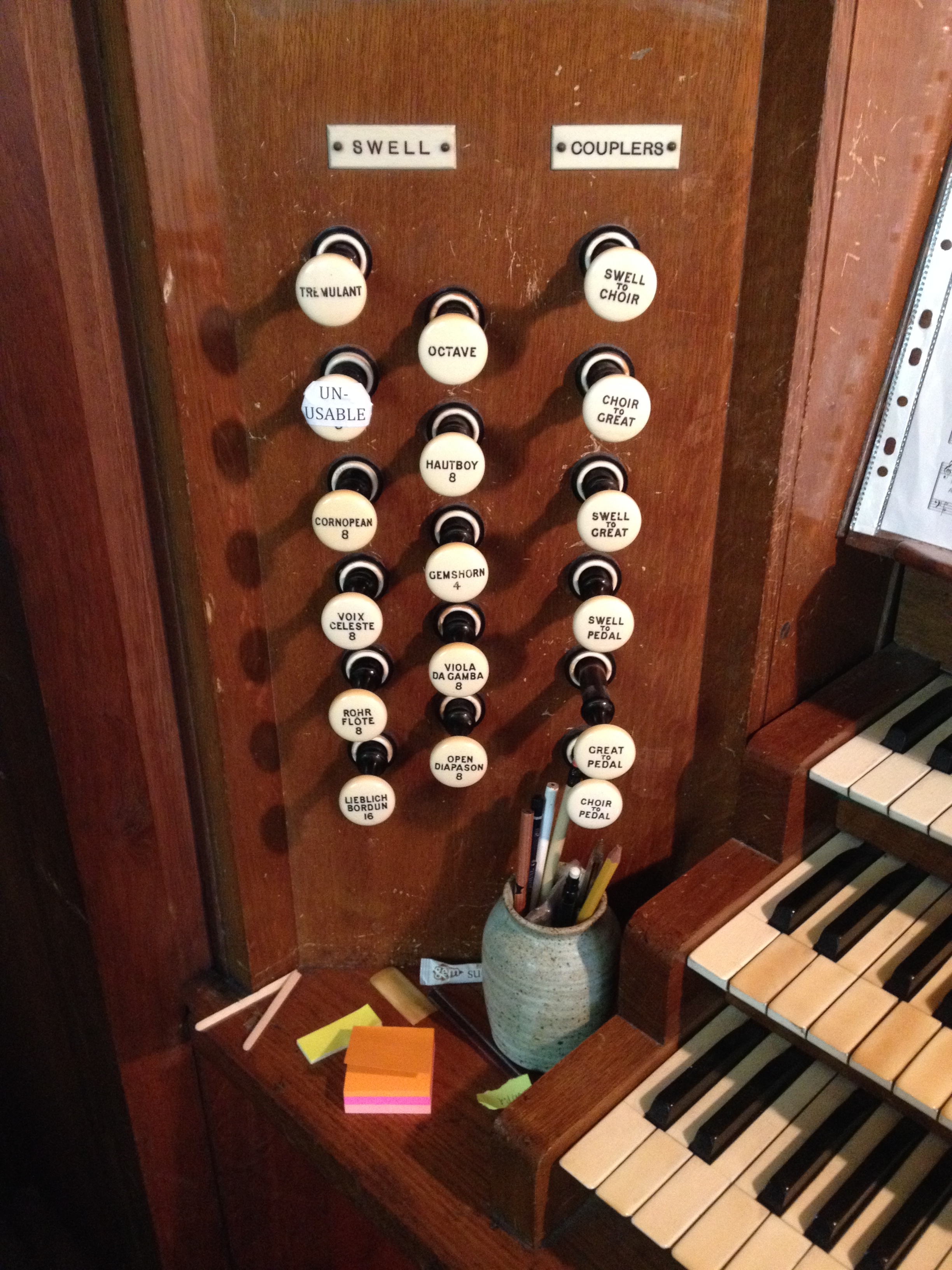
I was lucky enough to be invited together with my son to an organ recital recently.  It was a casual affair where you grabbed a tea and some cake and sat down for the recital cabaret style.

We turned up a little late and there were no tables left. All that was left was a row of seats about 10 feet – 3 metres my continental chums – directly behind the organist and his assistant. This afforded us an amazing view of all the work they had to do to pull off the rendition. There were three keyboard rows, a couple dozen pedals, and music papers everywhere that marked which organ stops had to be out for which piece of music. The more stops you have out – presumably; I’m no musician – the greater the range of different sound effects.

This got me thinking of the phrase ‘pulling out all the stops’ and how it relates to business. Pulling out all the stops means marshalling all the resources in your command and doing everything in your power to achieve something. If you’re in sales, there should only be one person you’re pulling out all the stops for.  It’s not you, and it’s not your boss. It’s your customer.

I know that sounds contradictory, but if you’re rooting for your customer and you’re their biggest advocate in your company, you will win big in the long run.

As a postscript, I accidentally published this post before the due date and a disappointed reader, met with a 404, sagely opined that perhaps I had pulled out too many stops. This is also true, you can pull out too many stops and put too much effort in for a sales opportunity. You need to balance the investment-reward equation.

In the high octane world of large deal size, long and complex sales cycles involving many buyers and influencers, there’s an awful lot to think about and an awful lot of work to do. It seems unfortunate, then, that forecasting such deals remains a black art, despite the technology in place focused on helping this tricky area. This is because the technology is simply the delivery mechanism, and if your data and discipline is weak, what it delivers is weak.

Many hours get taken up in forecast calls and meetings, with jargon like ‘drop dead’, ‘best guess’ and ‘upside’ permeating them and generally obfuscating the truth, or as close to the truth as we can manage. There’s a much bandied about statistic that forecasts are about 50% accurate. That means you might as well forget your forecast calls and flip a coin.

That doesn’t stop sales organisations around the world doing forecasts. Since your pipeline is really just an extension of your forecast, looking further into your future, it follows that for many organisations the pipeline really is a pipedream, a funnel full of fantasy.

Outside the world of complex sales – and who knows what proportion of all sales that is, maybe 80% – there are hundreds of thousands of sales organisations that don’t do forecasts or count pipeline. They don’t set quotas or targets, they might not pay commission, they don’t do deal reviews. They have folk out there selling and what comes in, comes in.

I don’t know how they can run their business with any confidence at all, especially in tough times. I think in general it’s a function of sales being so late to the top table in business. It’s something people have always done based on their intuition. Up until recently you couldn’t study sales at University or College. There was a marked absence of methodology, theory, training and formal structure. Compare this with the much newer profession of marketing which has the best part of a century’s curricular preparation under its belt.

So here, dear reader, are my top 6 pointers for a sales pipeline that means something to your business and that you can plan around:

1) Define what a sales opportunity is for your business. An opportunity is more than a lead. An opportunity is a lead + BANT, where your prospect has identified there is Budget, you’re speaking to the person with Authority, they have shared a Need for what you can deliver, and there is a Time by when they need to act. If it’s not an opportunity, it shouldn’t be in your pipeline. It’s not real enough and it clogs your pipeline with uncertainty and inaccuracy

2) Get a sales process. A sales process is a series of buying stages your customers go through to buy your stuff.  You might need a separate process for each group of customers buying a product or service from you. Lumping all your prospects into one sales process – unless you’re very lucky – will cloud and average out your data, which is not good

3) Define each stage. What needs to be in place on the customer’s side for the deal to be at that stage? Examples might be: the customer has agreed to an exploratory meeting; the customer has shared the BANT criteria; the customer has confirmed your price is acceptable

4) Get your reps’ to buy in to what you’re doing, so they contribute to refining the process and see the benefits of following and recording it

5) Make sure you have consistency across the business.  If your sales stages mean exactly the same to each rep – and they record their progress that way – you have consistent, reliable objective data in the forecast and pipeline

6) Make the technology easy to use, so it gives more back than your reps have to put in. You want to achieve the following virtuous circle: the more I use it – the better my information – the more deals I close – the more progress or money I make – the more I use it.  Hint: spreadsheets are not the answer, you need to use something browser-based so that there’s always a single up-to-date version.  It’s way too tedious for everyone otherwise

An accurate pipeline helps you plan for success and get early warnings of potential problems ahead. But you gotta get the basics right first.


I had occasion, dear reader, to go to France and Italy a few weekends ago. It was a bit of a road trip – with some planes and trains thrown in for good measure – and one of the earlier legs was the Eurotunnel from Folkstone to Calais. I’ve been on the Eurostar from London to Paris, but never the car-train thingy.

I didn’t know what to expect. I hadn’t booked the tickets as it was a surprise held in my dubious honour, so I hadn’t gone onto the website to see what it was all about. I was going in cold, which is always interesting from a marketeer’s perspective. It is always incredibly valuable to experience the customer journey through your product or service for the first time, because once you’ve got your feet under the table and you know where to look, what to do and what to expect, you can’t help first-time visitors navigate big idea any more.

I was expecting something like a cross between the car ferry and the Eurostar. Drive on, dump the car, chill for a couple hours, drive off. So, imagine my surprise when we drove onto a ‘carriage’ that houses about 3 or 4 cars and sat there. You can either sit in your car and feel mildly seasick as the train speeds through the tunnel, or you can get out of your car and walk up and down the side. There’s an emergency loo, but no cafeteria, no entertainment, no view, nothing.

I examined the inside of the carriage. There were lots of emergency notices and information about what you can’t do. What I didn’t know was that the journey is only 35 minutes long and there’s not much you can do.

One thing that struck me was that there was nothing to manage expectations for the first time traveller. You have to find stuff out for yourself, when it’s too late.

How hard would it be to produce a 3-minute video that runs in the terminal and the carriages to give you more information on the customer experience? It would put you at ease, enhance the experience and make you spend more money in the terminal, knowing that you would be without food and drink for the best part of an hour.

I’m not saying Le Shuttle is Le Shittle, far from it. It’s a massive investment and a huge time and money saver. It’s no nonsense, not quite ‘quick and dirty’ but certainly at the functional end of travel. What I am saying is that they need to work on the customer experience. And, when they do, everybody wins.

The majority of sales organisations and sales people intuitively distinguish between two types of sales person and sales role. The hunter is the new business person who gets the deal with the new customer in the door and then moves on to the next. The farmer is the account manager who develops that account and nurtures the relationship.

The received wisdom is that each role is suited to a particular type of character. Some folk are suited to the rough and tumble of closing the deal, others are better at deepening the rapport.

Then there is another view, propounded principally by companies like The TAS Group who are behind the Target Account Selling methodology. They argue that the best, most strategic and most successful sales people are those who strategise on target accounts, figure out where the need is, develop the opportunity for a sale and then close the opportunity themselves.

Where do you stand on this? Are opportunity management and account management dedicated, specialised roles that should stay separate, or should they be part of a combined, more strategic role? The answer, of course, is that it depends, but I’d be interested in your views on the matter.

A few years go, as a recent recruit to a sales effectiveness company, I briefed the powers that be on how I wanted to run my session. I wanted to start with a story on how it was lucky I made it to the US that day at all. I had a new smartphone and set my alarm for 6am on the Saturday, unaware that my alarm was set for weekdays and not weekends. I awoke at 6am anyway, and realised my error. In any event, the thrust of my story, I said, was that you can do all the planning you want, but sometimes you need a bit of luck.

The powers that be looked at me askance. This was not what they wanted to hear. You see, they said, the whole point of sales methodology and planning is that you remove luck from the equation. You leave nothing to chance and you control the eventualities of the sale with your ideally perfect knowledge and assessment of the situation.

That said, loads of us believe in luck, hope for luck, are counting on luck. Luck and hope may not be great strategies, but even with the best planning in the world you get the feeling that luck still has a role. That bluebird deal comes in when you thought the customer gone dark. A change of key personnel plays right into your hands, or takes the deal away from you. Sometimes you feel that stuff happens that you just can’t legislate for.

The concept of luck is an interesting one. Some folks believe in it, some don’t. There was a great Greek tragedy writer called Euripides writing about 2,500 years ago. I reckon he was better than his much vaunted peers Aeschylus – who wrote The Persians – and Sophocles – he of Oedipus the King – and only a handful of his plays like The Medea survive from the 90 or so he wrote. He believed that there was no such thing as good luck. There was either no luck, or bad luck.

I take a different view of luck from my erstwhile planning perfectionist employers. Great planning means you can allow for luck or karma, or you know what to do when the luck rolls in. As Gary Player once said: ‘The more I play, the luckier I get.’

Have you ever been in a company, institution or building and you hear a phone just ringing out? No answer machine, no voicemail system to let them know you called and to ask them to call you back?

That’s because they don’t want you to be able to put the ball back in their court. You’re the customer but they don’t care about you.

My favourite places for this to happen are public sector organisations, local government offices, state and semi-state institutions. They don’t understand customers, they don’t acknowledge you as a customer. You’re not a priority to them; they are a priority to them. They are part of the bloated state administration system and they wouldn’t last five minutes in the private sector.

This is the equation: Your call is not important to us + we don’t care about you = your call rings out.

Your solution: bypass them. Find another way to get what you need to get done.